🌸 Wisteria
Wisteria is a genus of flowering plants well-loved for its strikingly beautiful and fragrant flowers. Known for its extravagant clusters of purple, blue, or white blossoms, Wisteria is a popular choice in gardens around the world. It is often trained to grow over pergolas, arches, and walls, where its cascading flowers can be admired up close. While its beauty is undeniable, Wisteria is also appreciated for its hardiness and longevity, making it a favorite among both amateur and experienced gardeners.
🌼 Botanical Overview
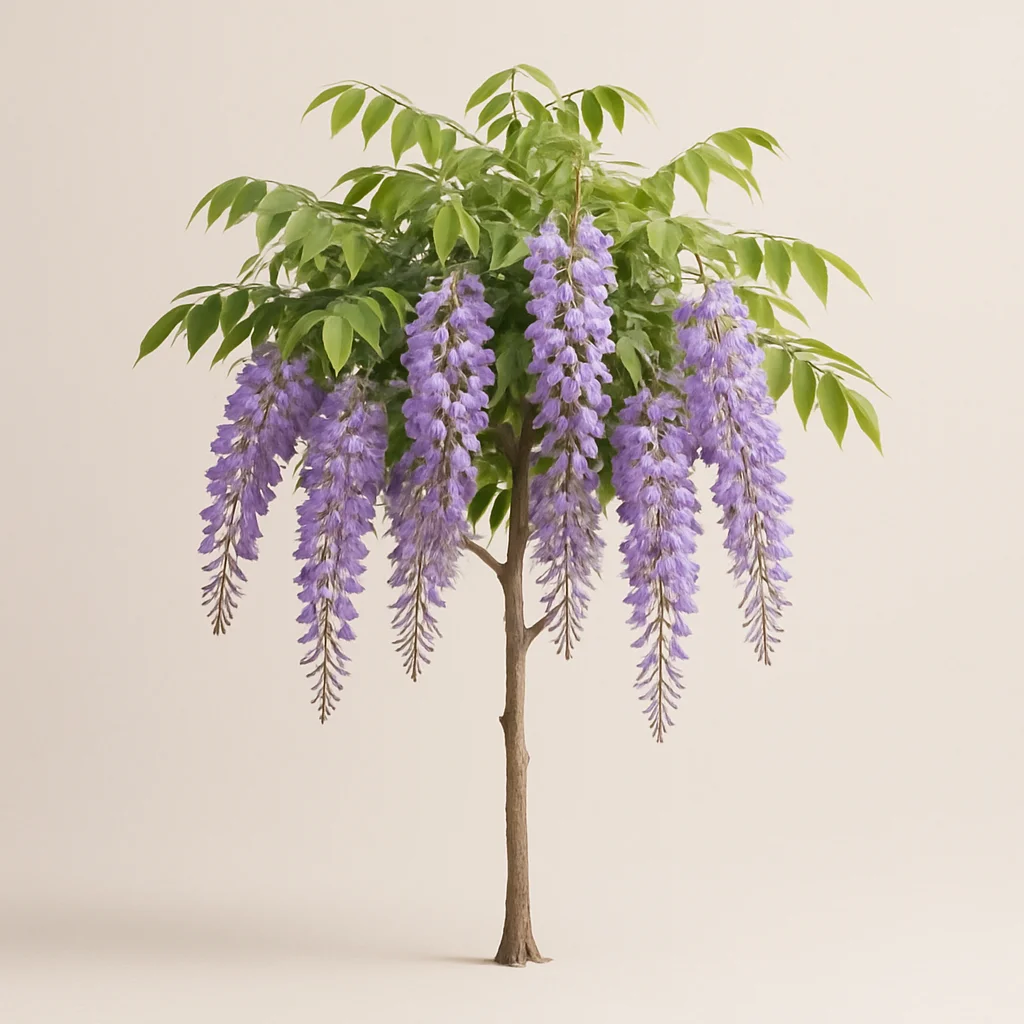
Wisteria belongs to the pea family, Fabaceae. It comprises several species that are mostly woody, climbing vines. The most common types of Wisteria found in cultivation include Wisteria sinensis (Chinese Wisteria) and Wisteria floribunda (Japanese Wisteria). These plants can grow quite large, often reaching heights and spreads of 20-30 feet or more with the right support structures. Wisteria plants have lush, pinnate leaves composed of multiple smaller leaflets, and their flowers grow in pendulous clusters, which can be quite dramatic in size and appearance.
- Family: Fabaceae
- Common species: Wisteria sinensis, Wisteria floribunda
- Growth habit: Woody, climbing vine
- Leaf type: Pinnate with several leaflets
🌍 Origin & Natural Habitat
Wisteria is native to regions of China, Korea, and Japan, where it grows in rich, moist soils along riverbanks, forest edges, and open fields. In its natural habitat, Wisteria climbs up into trees, creating a spectacular display when in full bloom. Its ability to adapt to various climates has allowed it to spread to various parts of the world, including Europe and North America, where it is often seen gracing gardens and arboretums.
📅 Blooming Season
The blooming season for Wisteria is one of anticipation and excitement among gardeners. In general, Wisteria flowers appear in late spring to early summer, with blooming times varying slightly depending on the species and local climate conditions. The abundant clusters of flowers remain in bloom for several weeks, providing a spectacular display of color and fragrance.
- Typical blooming period: Late spring to early summer
- Bloom duration: Several weeks
- Flower colors: Purple, blue, white
🌱 Growing & Care Tips
Growing Wisteria requires some patience, as these plants can take a few years to bloom for the first time. However, the spectacular floral display is well worth the wait. Here are some care tips to keep your Wisteria healthy and flourishing:
- Location: Choose a sunny location, as Wisteria thrives best in full sunlight. It can tolerate partial shade but may produce fewer blooms.
- Soil: Well-drained soil is essential. While Wisteria is adaptable to different soil types, it's important to avoid waterlogged conditions.
- Watering: Water young plants regularly to establish roots, but reduce watering once the plant is established to prevent root rot.
- Support: Provide a sturdy support structure like a trellis, pergola, or arch for the vine to climb.
✂️ Pruning & Maintenance
Pruning is one of the most crucial aspects of maintaining a healthy Wisteria plant, as it encourages flowering and controls growth. Effective pruning strategies include:
- Initial training: When planting a new Wisteria, establish a clear main stem and train it along the desired support structure.
- Regular pruning: Prune twice a year, once in winter to shape the plant and remove unwanted branches, and again in summer to cut back the current year's growth, which stimulates blossom production.
- Controlling spread: Regular pruning helps prevent Wisteria from becoming invasive, as unchecked growth can become unruly.
🌺 Symbolism & Cultural Meaning
In many cultures, Wisteria symbolizes beauty, love, and grace. It often represents new beginnings and the arrival of spring. In Japan, Wisteria is associated with longevity and immortality, as conveyed through traditional art and poetry. The graceful drooping habit of its flowers also inspires thoughts of humility and reflection.
- Symbol of beauty and love
- Represents longevity in Japan
- Commonly used in poetry and art
💐 Popular Uses & Arrangements
Wisteria's elegant flowers and lush foliage make it a popular choice for garden adornment and decorative arrangements. Here are some of the ways Wisteria is commonly used:
- Garden features: Wisteria is often planted along pathways, fences, and garden structures like pergolas and trellises, creating breathtaking floral tunnels.
- Bonsai: Wisteria can be trained as a bonsai for those who appreciate its beauty on a smaller scale.
- Ornamental trees: Although primarily grown as vines, Wisteria can also be shaped into stand-alone ornamental trees.
⚠️ Safety, Toxicity & Precautions
While Wisteria is a stunning addition to any garden, it's important to be aware of its toxicity. All parts of the plant, particularly the seeds and pods, are toxic if ingested by humans or animals. Precautions include:
- Keep Wisteria plants out of reach of small children and pets.
- Avoid planting Wisteria close to edible gardens to prevent accidental ingestion.
- Use gloves when pruning or handling the plant to avoid skin irritation.
📌 Summary
Wisteria is a captivating and romantic plant that enriches any landscape with its rich blooms and delightful fragrance. While it does require particular care and attention to thrive, the rewards are well worth the effort. Whether used to adorn garden structures or cultivated for bonsai, Wisteria's timeless beauty and symbolism make it a cherished plant around the world. However, gardeners should always be mindful of safety due to its toxic elements. With proper care and management, Wisteria can be a breathtaking addition to any outdoor space, inviting admiration season after season.