🌸 Wallflower
Wallflowers, belonging to the genus Erysimum, are a delightful group of plants cherished for their vibrant colors and captivating fragrance. Known for their ability to thrive in challenging conditions, these resilient flowers have gained widespread popularity among gardeners and plant enthusiasts alike. With over 180 species, wallflowers offer a diverse range of options for landscaping and decorative purposes, enhancing gardens with their long-lasting blooms and ease of care.
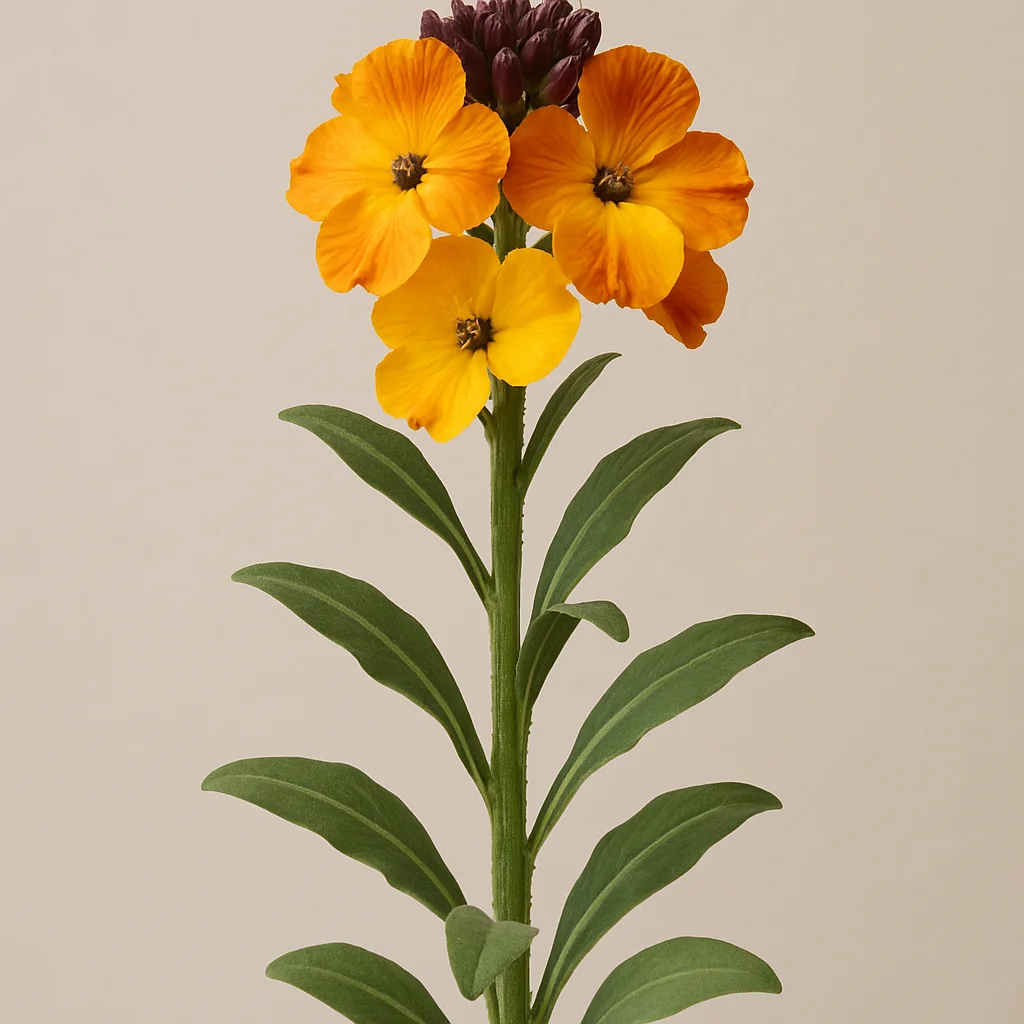
🌼 Botanical Overview
The genus Erysimum is part of the Brassicaceae family, which also includes cabbages and mustards. The most commonly cultivated species, Erysimum cheiri, is known for its beautiful blooms that can range from yellow and orange to deep purples and reds. Wallflowers are biennial or perennial plants, depending on the species and the growing conditions. Typically, they grow to a height of 30 to 90 centimeters, with lance-shaped leaves and clusters of four-petaled flowers that emit a sweet and alluring scent.
A full plant visible image of a wallflower would show the complete structure of the plant, showcasing the blooms along the stems with leaves well-spaced around them, highlighting their natural elegance and vibrancy. The flower clusters are held above the foliage, allowing the blooms to be easily visible and admired.
🌍 Origin & Natural Habitat
Wallflowers are native to Europe, Central Asia, and North America, thriving in temperate regions. They are often found in rocky habitats, open woodlands, and even urban environments, where they can self-seed and establish themselves on walls and in crevices, hence their name. The adaptability of wallflowers to various soil conditions and their ability to grow in poor soils have contributed to their widespread naturalization in many regions across the globe.
The complete bloom and stem image would capture the wallflower in its natural setting, anchored securely in rocky or urban environments, displaying its versatility and resilience, with each cluster of flowers perfectly showcased against their natural backdrop.
📅 Blooming Season
Wallflowers are known for their extended blooming season, providing a splash of color in the garden from early spring to late summer in many climates. Some species may even bloom through mild winters, making them an invaluable asset for gardeners looking for year-round interest. The wide range of colors available means wallflowers can seamlessly fit into any garden design, complementing other seasonal blooms or standing out as vibrant focal points.
An entire flower in frame image during their blooming season would show the clusters of flowers densely packed, demonstrating the rich color palette that wallflowers can bring to a garden setting, with all parts of the flower and surrounding foliage visible.
🌱 Growing & Care Tips
Wallflowers are celebrated for their low maintenance requirements and their ability to flourish with minimal intervention. To ensure a thriving growth environment, consider the following growing tips:
- Soil: Wallflowers prefer well-drained soil with a neutral to alkaline pH. While they can grow in poor soil, amending the ground with compost will enhance growth.
- Sunlight: Full sun is ideal for wallflowers, though they can tolerate partial shade, particularly in areas with extreme heat.
- Watering: Regular watering is essential during dry spells, but avoid waterlogged conditions, as wallflowers are prone to root rot.
- Feeding: An occasional application of balanced fertilizer during the growing season will promote robust growth and flowering.
In a garden setting, a full plant visible image would capture the ideal placement of wallflowers, highlighting their compatibility with diverse garden companions and showcasing their vibrant contribution to the landscape.
✂️ Pruning & Maintenance
Pruning wallflowers is a straightforward process that aids in maintaining the plant’s shape and encouraging further blooming. Here are some pruning tips:
- Deadheading: Regularly remove spent blooms to stimulate further flowering and prevent seed formation, which can sap the plant's energy.
- Trimming: Trim back woody stems after flowering to maintain a tidy appearance and encourage new growth.
- Overwintering: In colder climates, protect plants with mulch or bring pots indoors to shield from frost.
An entire flower in frame image post-pruning would show a bushier, more vigorous plant ready to produce new blooms in the coming season, emphasizing the benefits of regular maintenance in enhancing the plant's overall health and appearance.
🌺 Symbolism & Cultural Meaning
Wallflowers hold various symbolic meanings in different cultures. Traditionally, they are associated with fidelity and longing, often representing someone who stands back from the limelight, akin to the term "wallflower." However, their vibrant beauty and resilience also symbolize warmth, friendship, and bond, making them a favorite in floral arrangements intended for close friends and loved ones.
A complete bloom and stem image capturing the essence of wallflowers in a cultural setting would display their use in traditional bouquets or ceremonial displays, highlighting their layers of meaning and symbolic presence.
💐 Popular Uses & Arrangements
Wallflowers are a popular choice for a variety of horticultural uses due to their aesthetic appeal and versatile nature. Here are some common uses:
- Garden Borders: Wallflowers make excellent border plants, providing color and texture alongside pathways and garden edges.
- Mixed Plantings: Their diverse color range makes them ideal companions for tulips, daffodils, and other spring bloomers.
- Containers: Compact varieties do well in pots and window boxes, adding a touch of elegance to patios and balconies.
- Cut Flowers: Their long stems and lasting fragrance make wallflowers suitable for indoor arrangements, adding a burst of spring freshness to any room.
An entire flower in frame image in a mixed planting arrangement would feature wallflowers complementing other seasonal flowers, enhancing the visual harmony and depth of the garden environment.
⚠️ Safety, Toxicity & Precautions
While wallflowers are generally safe, it's important to be aware of potential toxicity. Some species of Erysimum may cause mild skin irritation, so it’s advisable to wear gloves when handling them. Additionally, wallflowers produce seeds that may be toxic if ingested in large quantities. It's recommended to keep them out of reach from small children and pets to prevent accidental ingestion.
A complete bloom and stem image with safe handling precautions would show the plant in a setting where blooms are admired but with clear safety barriers to protect unaware visitors from any potential harm.
📌 Summary
Wallflowers are an enchanting group of plants that enhance any garden with their striking blooms and delightful fragrance. Their resilience and adaptability make them a favorite among both seasoned gardeners and novices. With proper care and maintenance, wallflowers can provide vibrant color and interest throughout their blooming season, serving not only as beautiful ornamental plants but also as symbols of fidelity and warmth. Whether planted in garden borders or showcased in flower arrangements, wallflowers are sure to bring joy and enchantment to any setting.