🌸 Violet
The Violet, a beloved member of the genus Viola, is a graceful and vibrant flowering plant cherished for its pleasing appearance and delicate charm. Known for their wide variety of colors, ranging from deep purples and blues to bright yellows and whites, Violets are a staple in gardens and floral arrangements worldwide. Their versatility and elegant beauty have earned them a place in the hearts of garden enthusiasts, while their low maintenance and charming aesthetic make them a favorite among casual gardeners as well. Violets hold a special significance in various cultures, symbolizing modesty, innocence, and everlasting love.
🌼 Botanical Overview
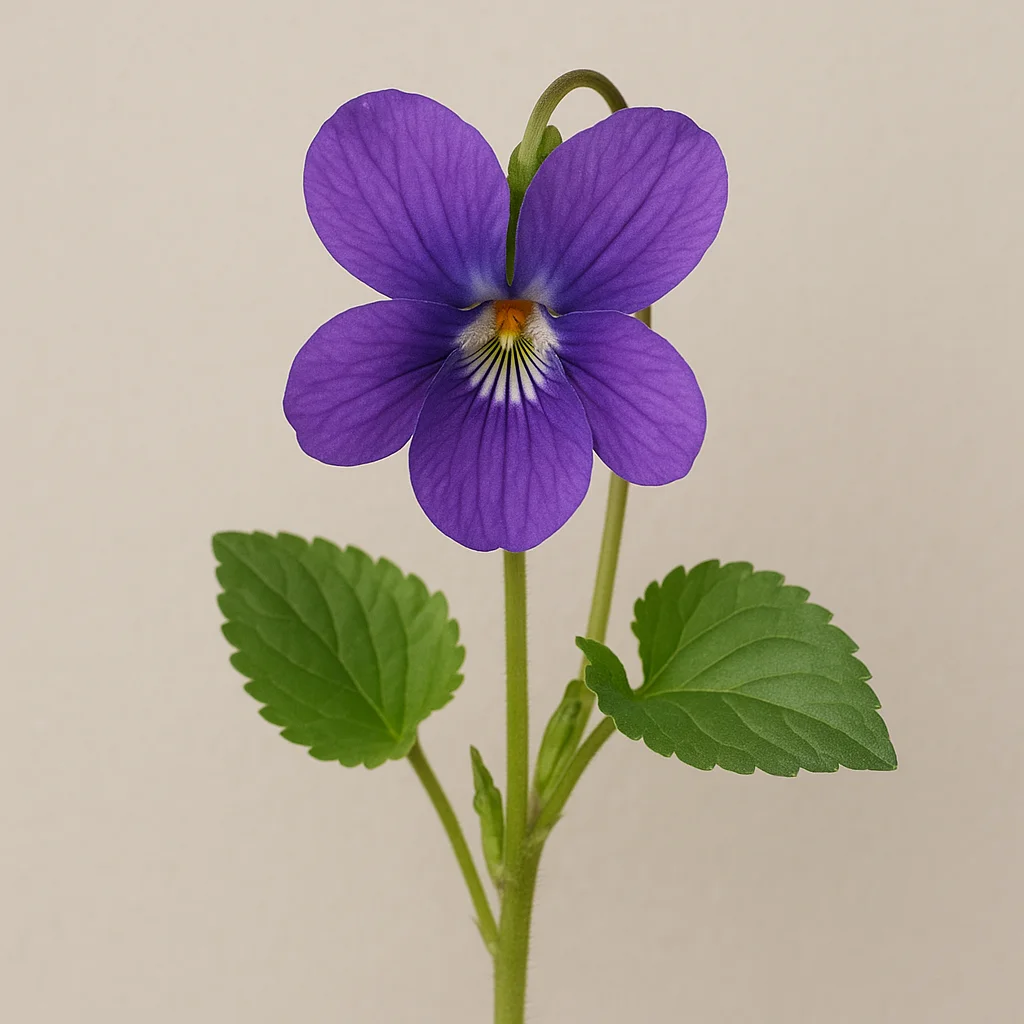
Violets belong to the family Violaceae, encompassing around 500 species. They typically exhibit a rosette of basal leaves, often heart-shaped and scalloped, with flowers that feature five delicate petals. The common blue violet, known scientifically as Viola sororia, is among the most well-known species. The flowers are bilaterally symmetrical with two upper petals, two side petals, and a lower petal that often serves as a landing pad for pollinators. Naturally perennials, Violets can live for several years with the proper care, reappearing each spring to announce the start of the blooming season.
🌍 Origin & Natural Habitat
Violets are native to temperate regions in the Northern Hemisphere but can be found growing across various parts of the world. These adaptable plants thrive in diverse environments, from woodland edges and open meadows to shaded forest undergrowth and even mountainous terrains. They prefer organic-rich soils and usually settle in areas with adequate moisture, although they can withstand brief dry spells. Their broad adaptability and relative hardiness have allowed Violets to flourish in gardens and natural settings alike, adding a touch of wild elegance to any landscape.
📅 Blooming Season
Typically, Violets bloom in the spring, a time when many gardens awaken to the vibrant colors and fragrances of new life. The specific timing of the flowering period can vary depending on local climate conditions and the specific Violet species, with blooms often appearing between March and June. Some species may even offer a secondary burst of blooms in the late summer or early fall, especially in regions with milder climates.
🌱 Growing & Care Tips
Growing Violets successfully largely depends on mimicking their natural environment. Here are some essential tips:
- Lighting: Violets prefer dappled sunlight or partial shade, as too much direct sun can scorch their delicate leaves and flowers.
- Soil: Well-draining, humus-rich soil works best. Adding organic matter such as compost can enhance soil quality.
- Watering: These plants enjoy consistent moisture but do not tolerate waterlogged conditions. Water when the soil surface begins to dry.
- Fertilizing: Feed Violets with a balanced, water-soluble fertilizer once during the spring and again in the mid-summer.
- Temperature: Violets thrive in cooler climates, generally preferring temperatures between 60°F and 70°F (15°C - 21°C).
✂️ Pruning & Maintenance
Pruning Violets is essential to encourage their healthy growth and prolong their blooming season. Remove spent blooms promptly to stimulate continued flowering and to help prevent diseases. Trimming back the foliage in late fall, after the blooming season has ended, can prepare the plant for a robust return in spring. Maintaining an annual cycle of cleaning and renewal ensures a lush and healthy plant the following year.
🌺 Symbolism & Cultural Meaning
Violets have held symbolic meanings across different cultures and eras. In ancient Greece, they were associated with love and fertility, often used in love potions. The Greeks and Romans used Violets in their wines and culinary dishes. Throughout history, Violets have symbolized modesty, innocence, and humble beauty. They are also the birth flower for February, representing faithfulness and wisdom. In literature, Violets appear in numerous works, often symbolizing delicate beauty and fleeting moments of grace.
💐 Popular Uses & Arrangements
The alluring blooms of Violets make them popular elements in both garden designs and floral arrangements. Their compact size and vibrant colors harmonize beautifully with other springtime flowers, making them ideal companions in mixed borders, rock gardens, and containers. In cut flower arrangements, Violets add a soft touch of color and are often used in boutonnieres and small bouquets. Their gentle fragrance makes them an excellent choice for natural potpourris and sachets, bringing a hint of nature's charm indoors.
⚠️ Safety, Toxicity & Precautions
While Violets are generally considered safe for human consumption, certain species may contain saponins and alkaloids, which can be toxic in large amounts. It is essential to identify the specific type of Violet before ingesting any part of the plant. For pets, Violets are typically non-toxic, making them a safer choice for households with cats and dogs. However, plant material ingestion should always be supervised to avoid digestive upset. Gardeners should use gloves when handling Violets to prevent potential skin irritation.
📌 Summary
The Violet, with its charming blooms and timeless beauty, continues to be a beloved fixture in gardens and floral motifs worldwide. Its easy care and versatility make it an excellent choice for seasoned gardeners and beginners alike. Beyond its aesthetic appeal, the Violet carries deep cultural significance, embodying modesty, love, and serenity with its gentle presence. Whether adorning a garden bed or expressed in art and literature, the Violet stands as a symbol of grace and tranquility, firmly rooted in the rich tapestry of botanical history.