🌸 Scilla
Scilla, commonly referred to as squill, is a genus of flowering plants that fall under the Asparagaceae family. Known for their stunning blue blooms, Scilla species contribute a charming aesthetic to gardens worldwide. Valued by gardeners for their early blooming characteristic, these delightful plants bring vibrant color and life after a long winter, making them a popular choice for ornamental gardening.
🌼 Botanical Overview
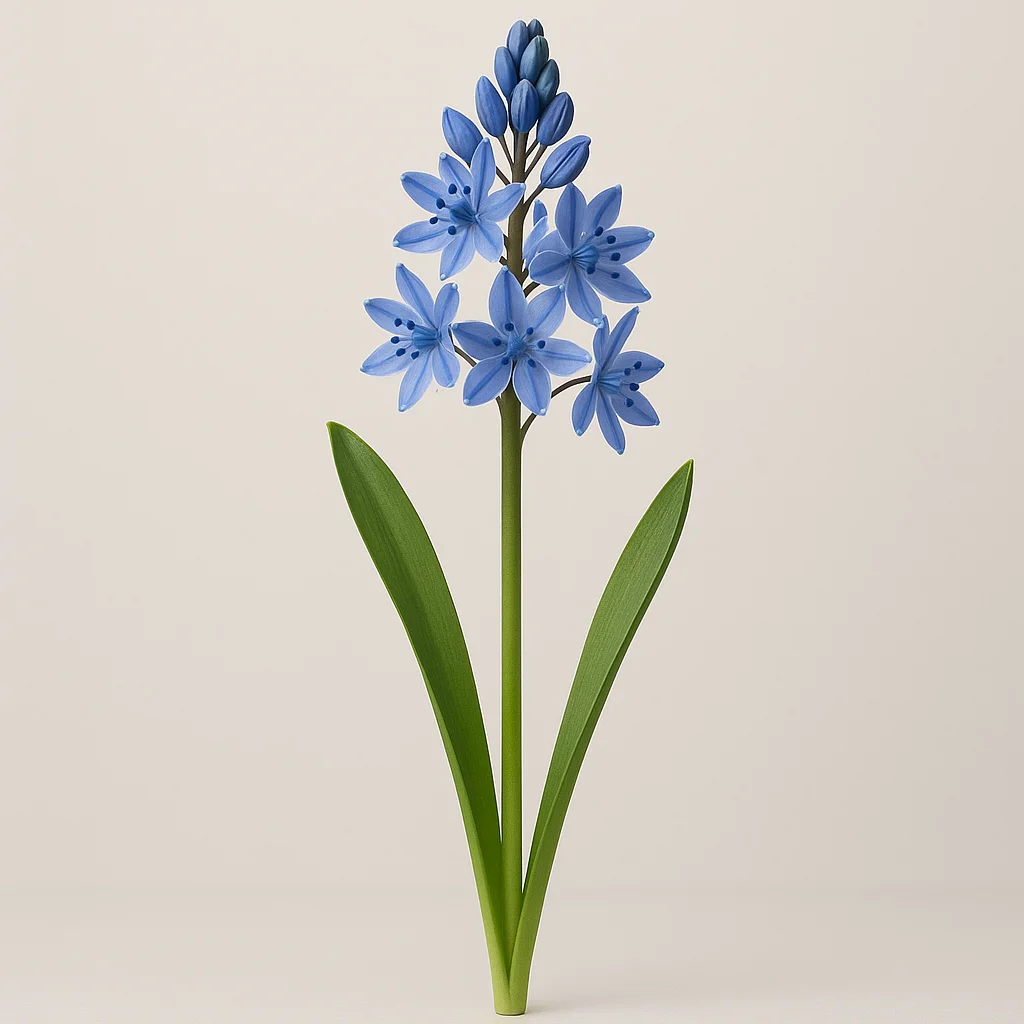
Scilla encompasses around 90 species of bulbous perennial herbs, which primarily display blue to violet flowers, though white and pink varieties can also occur. Each plant typically grows a cluster of elongated leaves at its base and bears a compact raceme or spike of starry blooms atop a slender stem. The plant's structure is simple yet elegant, with each flower featuring six petal-like segments that often exhibit a delicate reflex or a soft curve outward, adding to its charm.
🌍 Origin & Natural Habitat
The Scilla genus is native to various regions across Europe, Africa, and the Middle East. These plants are frequently found in the wild growing in forests, meadows, and rocky hillsides, where they enjoy well-drained soil and plenty of sunlight. Due to their adaptability, Scilla species have naturalized in various other parts of the world, including North America, where they thrive in similar environmental conditions.
📅 Blooming Season
One of the most attractive features of Scilla is its habit of blooming very early in the spring. In many regions, Scilla flowers can be seen peeking through the remnants of snow, a promise of the warmer days ahead. Typically, these plants begin to bloom from late winter to mid-spring, depending on the climate. The blooms last for several weeks, providing a vibrant display that signals the end of winter's grip.
🌱 Growing & Care Tips
Scilla is relatively easy to grow, making it a favorite among both novice and experienced gardeners. Here are some key tips to ensure healthy growth:
- Soil: Scilla prefers well-draining soil that is moderately fertile. Avoid waterlogged conditions, which can lead to bulb rot.
- Light: These plants do best in full sun to partial shade. Too much shade can inhibit flowering.
- Watering: While drought-tolerant once established, Scilla benefits from regular watering during active growth, especially if rainfall is lacking.
- Planting: Bulbs should be planted in the fall, about 3 to 4 inches deep and 2 to 3 inches apart.
- Fertilization: An annual application of a balanced fertilizer in early spring can support robust growth and blooms.
✂️ Pruning & Maintenance
Scilla requires minimal pruning. After the flowering period, allow the foliage to die back naturally as this process helps replenish the bulbs for the next year's growth. Remove yellowed or decayed leaves and flower stems to maintain neatness and prevent the spread of disease. For long-term maintenance, consider dividing the bulbs every few years to prevent overcrowding and to rejuvenate the plantings.
🌺 Symbolism & Cultural Meaning
In the language of flowers, Scilla is often associated with loyalty and constancy. Its early bloom is symbolic of hope and renewal, a reminder of nature's resilience. Historically, Scilla species have been included in folklore and traditional remedies, although contemporary use is primarily ornamental. In various cultures, the blue-flowered varieties hold a special place in springtime celebrations and are cherished for their ability to herald the changing seasons.
💐 Popular Uses & Arrangements
Scilla's striking blue flowers make a lovely addition to mixed borders, rock gardens, and woodland gardens. They work well when planted en masse, creating a sea of color that can transform any landscape. The plants also lend themselves beautifully to naturalized settings, where they complement other spring-blooming bulbs like tulips and daffodils. In cut flower arrangements, Scilla adds a touch of elegance and is often used to create delicate and enchanting bouquets.
⚠️ Safety, Toxicity & Precautions
While Scilla is generally safe to touch, it's important to note that the bulbs contain compounds that can be toxic if ingested by humans or pets. Symptoms of ingestion include nausea, vomiting, and diarrhea. Therefore, care should be taken to plant Scilla in areas accessible to pets and children. Always wash hands after handling the bulbs or foliage, and consider wearing gloves if you have sensitive skin.
📌 Summary
Scilla is a resilient and captivating genus of plants that offers beauty and charm to gardens worldwide, particularly during the early spring. With its delightful blooms, ease of care, and ability to naturalize, it has become a favored choice among gardeners seeking to add a splash of color to their landscapes. By understanding the basic needs and characteristics of Scilla, you can enjoy the benefits of these elegant flowers year after year.