🌸 Primrose
The primrose, belonging to the genus Primula, is a cherished flower that blooms in diverse shades, gracing gardens and wild spaces alike. Known for its vivid colors and delicate petals, the primrose holds a special place in both horticulture and culture. Its popularity stems from its early blooming season, signaling the arrival of spring, and its versatility in gardens and floral arrangements.
🌼 Botanical Overview
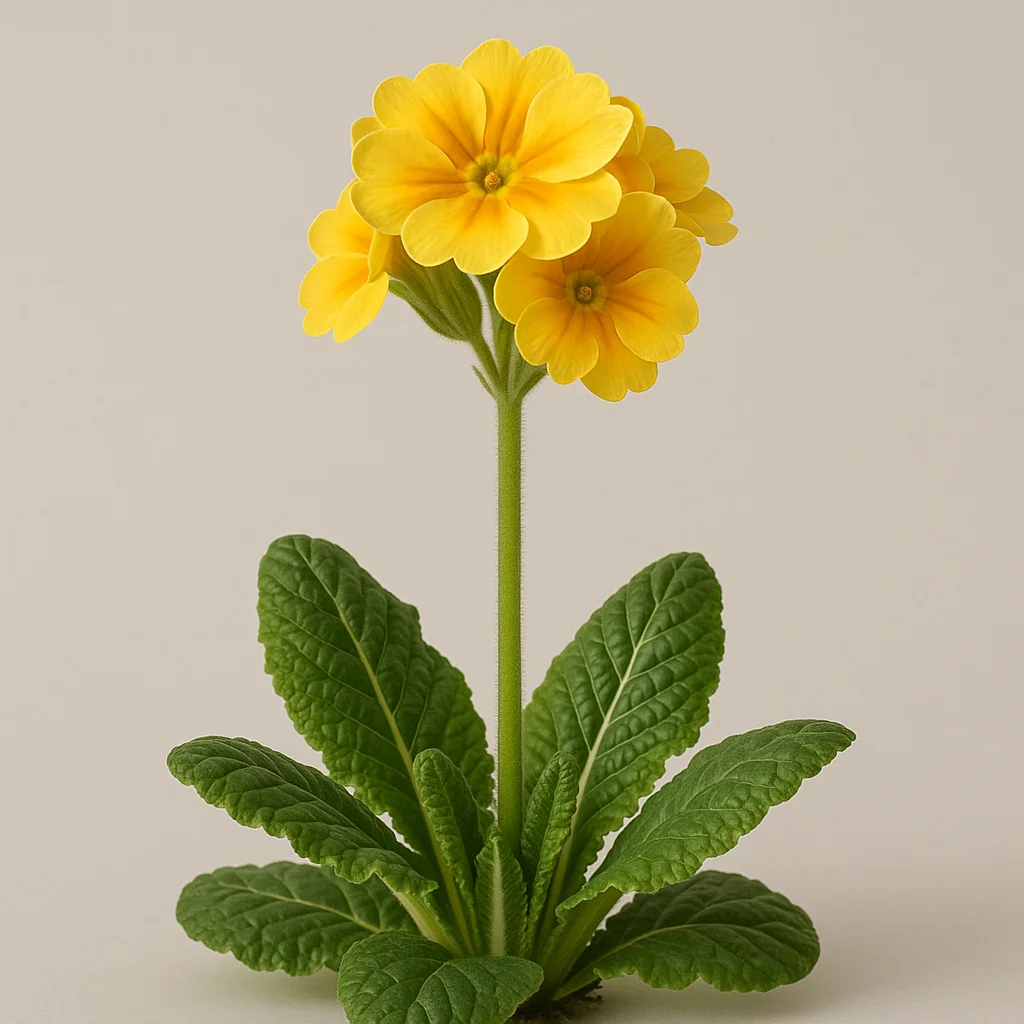
The primroses are part of the Primulaceae family, encompassing over 500 species. These herbaceous plants are primarily perennial, although some species exhibit biennial characteristics. Recognized by their rosette of basal leaves and clusters of scented flowers, primroses come in a palette that ranges from pinks and purples to vibrant yellows and whites. Each bloom is typically supported by a slender stem, and the plant overall maintains a compact and manageable size.
🌍 Origin & Natural Habitat
Primroses are native to the temperate regions of the Northern Hemisphere, with a significant concentration in the Himalayas and China. Their natural habitats include alpine environments, woodlands, and meadows, where they thrive in the humus-rich soils and dappled sunlight. These conditions mimic the early spring environment when they naturally bloom before the full onset of spring.
📅 Blooming Season
One of the most charming aspects of the primrose is its early blooming season. Primroses are among the first flowers to bloom as winter recedes, often appearing as early as late winter and continuing into late spring. This early blooming pattern not only signifies the end of harsh winter conditions but also provides critical food sources for pollinators emerging from hibernation.
🌱 Growing & Care Tips
Primroses are relatively easy to cultivate, making them popular choices for beginner gardeners and seasoned horticulturists alike. Here are some tips for ensuring their optimal growth:
- Location: Choose a spot with partial shade to mimic their natural woodland habitats. Avoid direct sunlight during hot afternoons to prevent scorching.
- Soil: Use well-draining soil enriched with organic matter. Primroses thrive in slightly acidic to neutral pH levels.
- Watering: Maintain consistent soil moisture, especially during dry periods, but ensure proper drainage to prevent root rot.
- Feeding: Apply a balanced, slow-release fertilizer in early spring to promote healthy growth and blooming.
✂️ Pruning & Maintenance
Regular maintenance will keep your primroses healthy and encourage continuous blooming:
- Deadheading: Remove spent flowers to direct the plant's energy toward new blooms and prevent unwanted self-seeding.
- Leaf Management: Trim any yellowing or damaged leaves to maintain plant health and aesthetics.
- Division: Every few years, divide overcrowded clumps in early spring or autumn to rejuvenate growth and increase plant populations.
🌺 Symbolism & Cultural Meaning
Primroses hold various symbolisms across cultures. Traditionally, they are seen as emblems of youth and everlasting love. In the language of flowers, they convey the message "I can't live without you," highlighting their romantic associations. Additionally, in folklore and mythology, primroses are associated with protection and transitions, often depicted as thresholds between worlds.
💐 Popular Uses & Arrangements
Due to their vibrant colors and early flowering, primroses are popular in several garden settings and arrangements:
- Border Plants: Use primroses to add color to garden borders, especially at the front where their compact height can be appreciated.
- Containers: Plant primroses in pots and window boxes to brighten patios and windowsills.
- Floral Arrangements: Combine primroses with other spring blooms for cheerful bouquets that herald the season's renewal.
⚠️ Safety, Toxicity & Precautions
While primroses are generally safe, some species may cause mild skin irritation or allergic reactions due to contact with their foliage. It is advisable to wear gloves when handling the plant if you have sensitive skin. Moreover, while not highly toxic, ingestion by pets or small children should be discouraged to prevent potential digestive discomfort.
📌 Summary
Primroses are a beloved harbinger of spring, celebrated for their colorful blooms and ease of growth. Whether enhancing gardens or featuring in symbolic cultural narratives, they offer beauty and fascination. By providing the right conditions and care, gardeners can enjoy a profusion of blooms and the delightful promise of spring year after year.