🌸 Pear Blossom
The pear blossom is a captivating sight that heralds the arrival of spring in many temperate regions. As one of the first blooms to appear, these delicate white flowers contribute to the aesthetic beauty of gardens and orchards. They hold significance not only for their visual appeal but also for their ecological role in supporting pollinators and their historical importance in agriculture and culture. This article provides a comprehensive guide to the pear blossom, exploring its botanical characteristics, origins, care requirements, and cultural meanings.
🌼 Botanical Overview
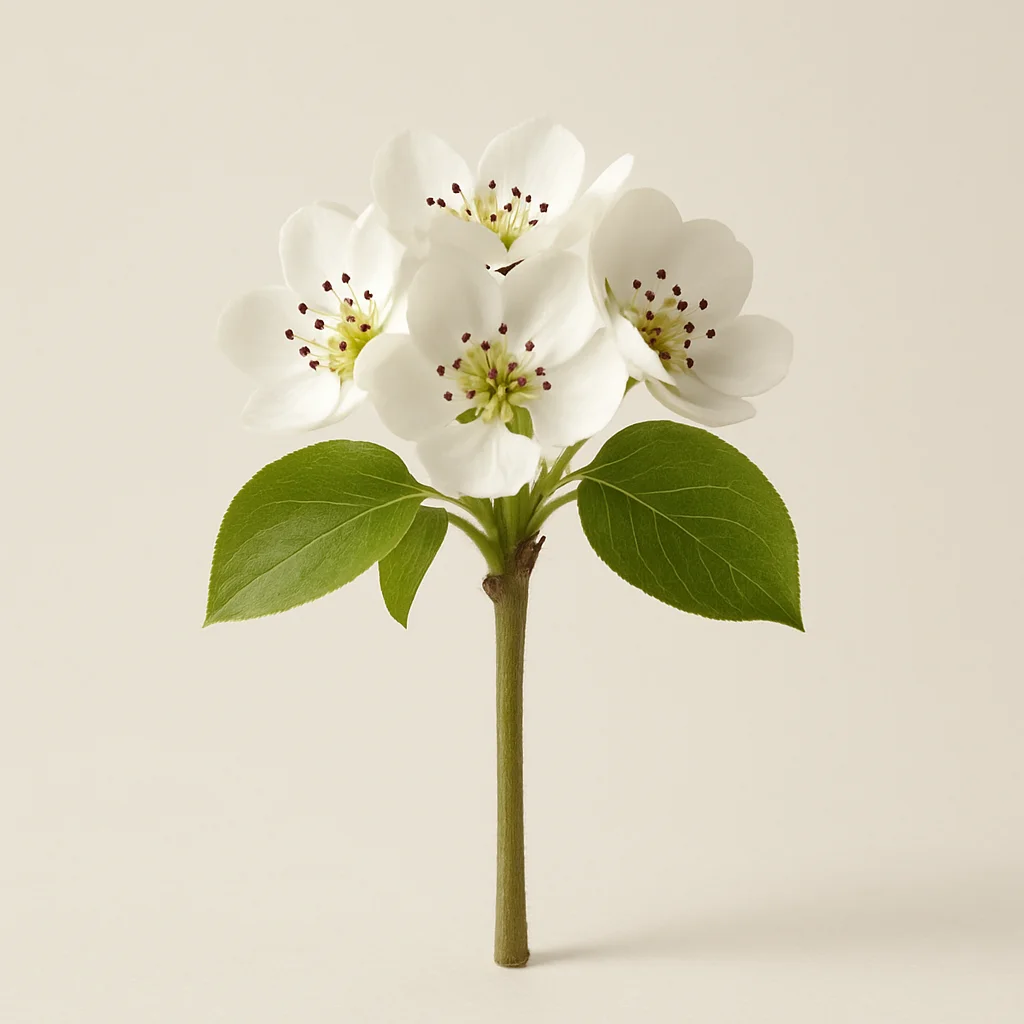
The pear blossom belongs to the genus Pyrus, part of the larger Rosaceae family. Pear trees typically produce clusters of five-petaled white flowers, sometimes exhibiting a subtle pink hue at their center. These blooms are somewhat reminiscent of apple blossoms, another member of the Rosaceae family. A standard depiction of a pear blossom picture would show the complete flower plant, including the entire bloom and visible leaves.
- Genus: Pyrus
- Family: Rosaceae
- Flower Color: White (occasionally with a pink tinge)
- Leaf Description: Glossy, green, and ovate, found alongside the blooms
🌍 Origin & Natural Habitat
Pear trees are native to the region spanning Western Europe to Eastern Asia. Historically, these trees have been cultivated for both their blossoms and their fruit. In their natural habitat, pear trees thrive in temperate climates with well-drained soil. A typical image used to illustrate this aspect might show the entire flower plant within an orchard setting, with the complete bloom and stem fitting perfectly in the frame against a clear sky or verdant backdrop.
📅 Blooming Season
The pear blossom typically emerges in early spring, often around March or April, depending on the climate. These flowers precede the leaves, making them one of the first signs of spring's progression. This timing is crucial, as it aligns with the activity of pollinators essential for fertilization. A suitable photo depiction would include the entire flower in frame during its blooming season, capturing the vitality of new growth.
🌱 Growing & Care Tips
For gardeners looking to cultivate pear trees for their blossoms or fruit, several considerations are important:
- Soil: Plant in well-draining soil with a pH level between 6.0 and 7.0.
- Sunlight: Ensure full sun exposure to facilitate healthy growth and flowering.
- Watering: Water young trees regularly to establish deep roots, reducing frequency as the tree matures.
- Fertilization: Apply a balanced fertilizer in early spring to encourage robust blooming.
✂️ Pruning & Maintenance
Pruning is an integral part of maintaining the health and aesthetics of pear trees. Regular pruning not only shapes the tree but also encourages better air circulation and sunlight penetration:
- Timing: Prune in late winter or early spring, before new growth begins.
- Technique: Remove dead or diseased branches, and thin out crowded areas to promote vigorous blooming.
- Tools: Use clean, sharpened tools to make precise cuts and reduce the risk of disease.
🌺 Symbolism & Cultural Meaning
Pear blossoms are steeped in symbolism and cultural significance. In various cultures, they represent purity, renewal, and longevity. They are often celebrated in spring festivals and are depicted in works of art and literature. Images showing the full plant visible during its peak blooming can evoke these enduring themes of life and beauty.
💐 Popular Uses & Arrangements
Though primarily known for their fruit, pear blossoms find their place in floral arrangements and decorative arts:
- Floral Arrangements: The delicate nature of pear blossoms makes them a favorite in bridal bouquets and spring centerpieces.
- Decorative Display: Frame a picture of complete bloom and stem in home decor to bring the freshness of spring indoors.
- Essence and Oils: While less common, blossoms can also be used in crafting scented products.
⚠️ Safety, Toxicity & Precautions
While pear blossoms are generally safe, some precautions should be noted:
- Pollination: Though essential for fruit production, some individuals may experience mild allergies during peak pollination.
- Handling: Avoid ingesting any part of the plant without proper knowledge, as some varieties may produce inedible seeds.
📌 Summary
The pear blossom is a plant of striking beauty and ecological importance, with a rich history that extends across continents. This guide serves as a practical resource for those interested in the cultivation and appreciation of this remarkable bloom. Whether admired for its aesthetic value, grown for its symbolic meaning, or viewed in its entirety in a well-composed image, the pear blossom continues to captivate nature lovers and cultivators alike.