🌸 Nemesia
Nemesia, a charming genus of flowering plants in the family Scrophulariaceae, is celebrated for its vibrant and eye-catching blossoms. Native to South Africa, Nemesias are beloved by gardeners for their long-lasting blooms and diverse color palette. These delightful annuals and perennials are popular choices for both container gardening and flowerbeds, where they offer a refreshing burst of color and elegance. In addition to their aesthetic appeal, Nemesia's easy-growing nature makes them a favorite among both novice and experienced gardeners.
🌼 Botanical Overview
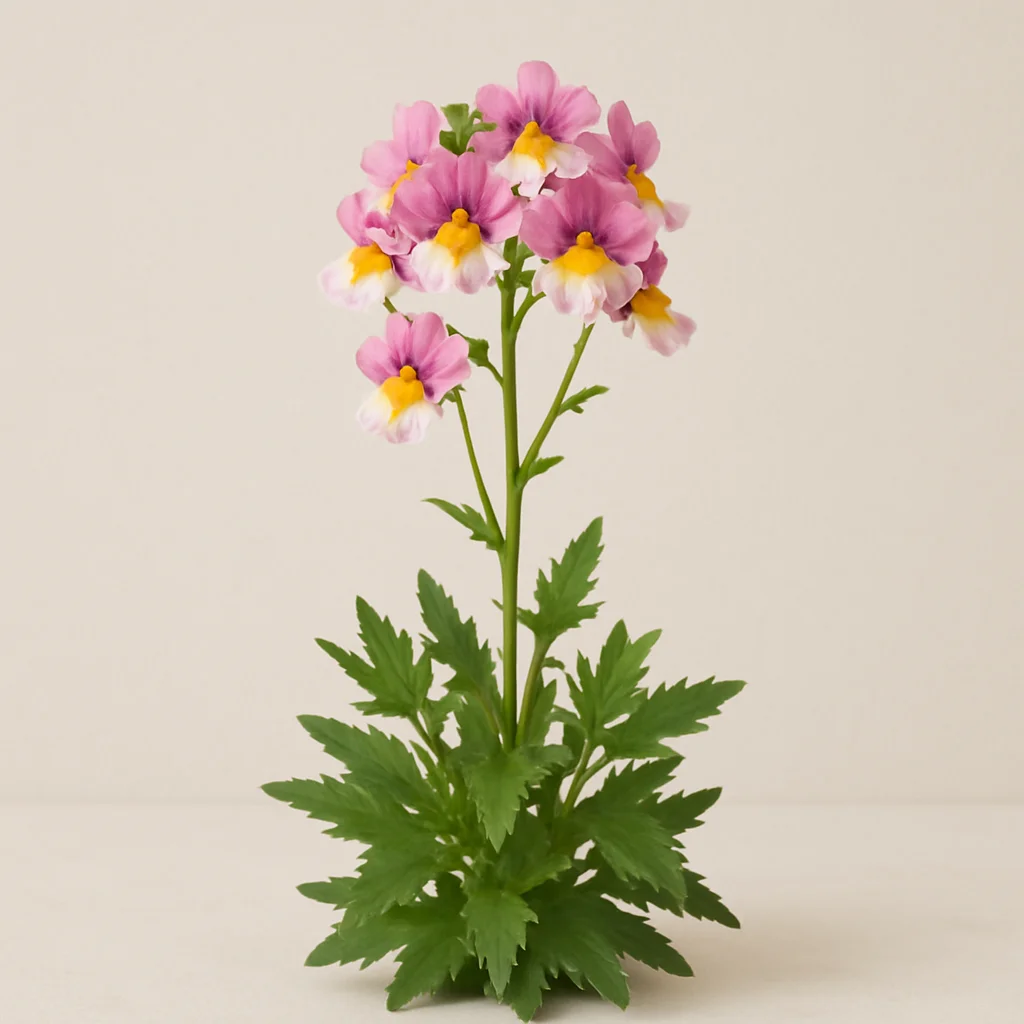
Nemesia consists of approximately 50 species, with Nemesia caerulea and Nemesia strumosa being among the most commonly cultivated. These plants typically grow between 6 to 24 inches in height and bear profuse, vividly colored flowers. The blooms are often bilaterally symmetrical, with a tubular structure that flares into a two-lipped configuration. The varied colors, including white, purple, pink, yellow, and orange, make them a versatile addition to gardens.
Full plant visible images of Nemesia highlight the complete bloom and stem, showcasing delicate petals and fine-textured foliage. The overall plant form is compact, lending itself well to tight garden spaces or window boxes.
- Family: Scrophulariaceae
- Genus: Nemesia
- Common Name: Nemesia
- Plant Type: Annual or short-lived perennial
🌍 Origin & Natural Habitat
Originating from South Africa, Nemesias thrive in environments that mimic their native conditions. They are found in habitats that range from coastal regions to more arid interior zones. These plants generally prefer sunny conditions and well-drained soil. The climates in which they naturally occur tend to be mild with an abundance of sunlight, factors that contribute significantly to their robust flowering in cultivation.
The complete bloom and stem images often show Nemesia as it appears in these natural settings, capturing their adaptability and resilience.
📅 Blooming Season
Nemesias are known for their extended blooming period, with their flowers typically appearing from late spring to early fall. Under optimal conditions, flowering can persist for months, providing vibrant splashes of color throughout the growing season. Deadheading, or the removal of spent flowers, can further encourage blossoming. Bloom periods may vary slightly depending on climate and specific varieties.
Entire flower in frame images during the blooming season show the plant at its peak, adorned with lush, colorful flowers set against a rich green foliage backdrop.
🌱 Growing & Care Tips
To successfully cultivate Nemesia, a few simple guidelines should be followed:
- Soil: Ensure well-draining soil, as waterlogged conditions can lead to root rot.
- Light: Full sun is ideal, although partial shade can be tolerated, especially in hotter climates.
- Watering: Regular watering is necessary to keep the soil lightly moist, particularly during dry spells.
- Feeding: A balanced, water-soluble fertilizer applied during the growing season can promote vigorous growth and flowering.
Complete bloom and stem images emphasize the lushness achieved through proper care, highlighting healthy foliage and abundant flowers.
✂️ Pruning & Maintenance
Pruning is an important maintenance task to ensure the longevity and vibrancy of Nemesia blooms. Regular deadheading prevents plants from going to seed prematurely, which can extend the flowering season. Additionally, cutting back plants midway through the growing season can encourage a fresh flush of growth and blooms. Keep an eye out for unhealthy or leggy growth and trim as needed to maintain an attractive form.
Full plant visible images depicting Nemesia post-pruning reveal more compact, bushy plants with renewed vigor and a profusion of new flowers.
🌺 Symbolism & Cultural Meaning
Nemesia flowers are often associated with heartfelt love and kindness, making them a popular choice in floral arrangements meant to convey warmth and affection. Their bright and cheerful blooms also symbolize youth and optimism, embodying the joy of life and new beginnings. Cultural significance varies, but their contribution to garden aesthetics and their simplicity in care has endeared them to flower enthusiasts worldwide.
Images capturing complete bloom and stem often encapsulate their symbolic meanings, framed harmoniously with other garden elements to convey thematic expressions.
💐 Popular Uses & Arrangements
Nemesias are versatile in their applications within the garden. They can be used as accents in border arrangements, offering a pop of color against a backdrop of green foliage. Additionally, they thrive in hanging baskets and containers, where their trailing habit allows them to spill attractively over edges. In floral arrangements, Nemesias are valued for their vivid colors and delicate appearance, adding texture and dimension to bouquets.
In entire flower in frame images, Nemesia is often featured in mixed plantings, harmonizing with complementary flowers and foliage for an appealing display.
⚠️ Safety, Toxicity & Precautions
Nemesia is generally considered non-toxic, making it a safe choice for gardens frequented by pets and children. However, it’s always advisable to prevent ingestion of any plant material by pets, as individual reactions may vary. While handling plants, some individuals might experience mild skin irritation, so wearing gloves or washing hands after gardening can be prudent.
Full plant visible images of Nemesia in domestic garden settings reassure viewers of their suitability in family-friendly environments.
📌 Summary
With its striking flowers and ease of cultivation, Nemesia continues to enchant gardeners and flower enthusiasts worldwide. Originating from South Africa, it has adapted to various growing conditions while maintaining its aesthetic appeal. From its cultural symbolism to practical uses in garden design and floral arrangements, Nemesia is a versatile and rewarding plant to include in any gardening endeavor. Embrace the vibrancy and charm of Nemesia, and let it invigorate your garden with life and color.