🌸 Jacob’s Ladder
Jacob's Ladder is a charming perennial plant known for its delicate, ladder-like leaves and its clusters of soft, nodding flowers. With its name stemming from the biblical story of Jacob's vision of a ladder reaching into heaven, the plant brings a touch of elegance and peace to gardens and landscapes. This plant is cherished not only for its aesthetic beauty but also for its robustness and versatility across a variety of gardening environments. Jacob's Ladder is a favorite among gardeners of all skill levels due to its low maintenance and its ability to thrive in a range of conditions.
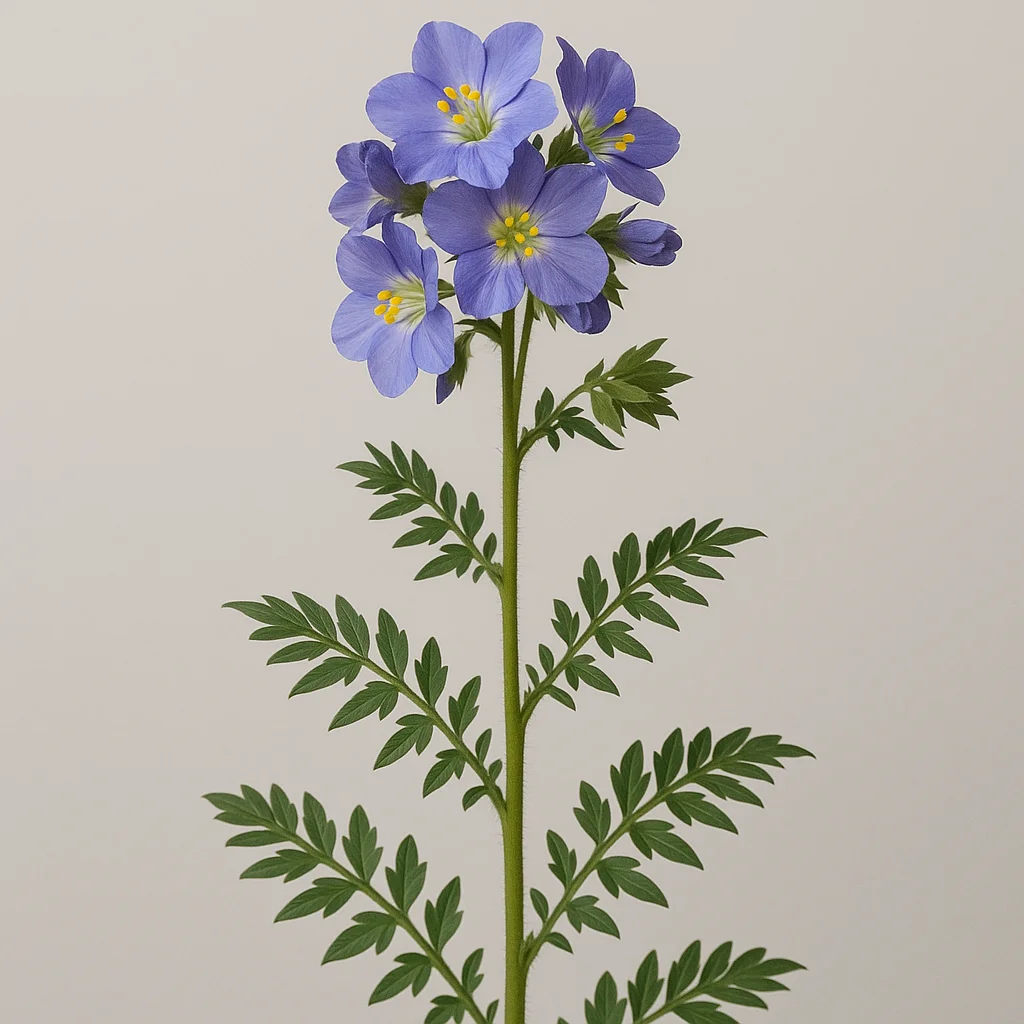
🌼 Botanical Overview
The botanical name for Jacob's Ladder is Polemonium caeruleum. It is part of the Polemoniaceae family, a group of flowering plants that tend to thrive in cooler climates. This herbaceous perennial features pinnate leaves, where its small, pointed leaflets arrange in a manner that resembles the runged steps of a ladder. This distinctive leaf arrangement is one of the plant’s most notable characteristics and the inspiration for its common name.
Jacob's Ladder typically grows to about one to three feet in height, with a spread of one to two feet. The flowers are usually blue, though they can also be violet, pink, or white, and they bloom in clusters at the top of the stems. Each flower consists of five petals and is bell-shaped, adding to its delicate aesthetic. For an ideal image representation, think of a "complete bloom and stem" view where the entire length of the plant from flower to root is captured clearly.
🌍 Origin & Natural Habitat
Jacob's Ladder is native to Europe and Asia, particularly in regions with temperate climates. It often grows in damp, shaded environments such as woodlands, riverbanks, and mountain meadows. Its adaptability to shade and preference for moisture make it particularly suitable for areas in the garden that replicate these conditions.
In the wild, Jacob’s Ladder is found thriving in nutrient-rich soils that retain moisture yet drain well. It is often seen in environments where there is protection from the harsh midday sun, showing a preference for dappled or partial sunlight.
📅 Blooming Season
The blooming season for Jacob's Ladder typically begins in late spring and can extend into the early summer months. This makes it a wonderful choice for extending the display of color in garden beds following the bloom of early spring bulbs. During this time, the plant exhibits its characteristic clusters of flowers, providing a delightful burst of color amidst the greenery.
For those looking to capture the aesthetic merit of this plant during its peak, imagine an image with the "entire flower in frame." Such a representation would capture the full, multi-clustered blooms that make Jacob’s Ladder a garden favorite during its blooming period.
🌱 Growing & Care Tips
Growing Jacob’s Ladder requires some attention to its preferred conditions but is largely straightforward. The plant thrives in environments that simulate its native habitat, which includes partial shade and moist, well-drained soil. It is important to ensure that the plant does not dry out completely, especially during periods of extended heat, as this can adversely affect its growth and blooming potential.
- Light: Partial shade is ideal, though some morning sun can enhance flowering.
- Soil: Prefers humus-rich, well-draining soil that retains moisture.
- Water: Regular watering, especially in dry spells, while ensuring not to overwater.
- Temperature: Cooler climates are preferred, and it can be sensitive to extreme heat.
- Fertilization: A mulch of organic compost in the spring can enhance growth.
For best practice, aim for an environment that provides consistent conditions, minimizing extremes in temperature and moisture to keep the plant thriving.
✂️ Pruning & Maintenance
Pruning Jacob's Ladder is essential to maintain its shape and encourage a strong plant structure. Deadheading spent flowers will promote further blooming and prevent the plant from self-seeding excessively, which it is prone to do. At the end of the blooming season, cutting back the plant can also encourage fresh growth and maintain its appearance.
Regular trimming of the outer leaves can also help reduce the risk of disease and pest infestations, and a full plant visible in an image would show healthy, robust growth without any signs of damage or decay.
🌺 Symbolism & Cultural Meaning
Jacob's Ladder has a long-standing association with spiritual ascent and enlightenment, largely due to its biblical namesake. In Christian tradition, the ladder represents the bridge between heaven and earth, a symbolic journey of growth and progression. This gives the plant a deeper meaning beyond its physical beauty, making it a thoughtful addition to gardens designed with symbolism in mind.
The plant’s serene blue flowers and orderly, ladder-like leaf formation also symbolize tranquility and order, making it popular in gardens designed for meditation and reflection.
💐 Popular Uses & Arrangements
Jacob's Ladder is often used in garden designs that emphasize natural beauty and wildflower aesthetics. It works well in borders and cottage gardens and is particularly effective in shaded perennial beds. Its ability to pair well with other shade-loving plants such as ferns and hostas makes it versatile in more structured garden designs.
- Garden Borders: Perfect for dappled sunlight areas, offering height and color.
- Wildlife Gardens: Attracts bees and pollinators, enhancing biodiversity.
- Cut Flower Arrangements: Stems can be used in bouquets, providing a soft, natural look.
For arrangement in floral displays, consider a combination of Jacob’s Ladder with similarly toned flowers for a cohesive look, or pair with contrasting colors for a vibrant display.
⚠️ Safety, Toxicity & Precautions
Jacob's Ladder is considered safe and non-toxic to humans and pets, making it an excellent choice for family gardens. However, as with all plants, it is important to handle with care and not to consume any part of the plant without proper knowledge, as reactions can vary.
For those interested in eco-friendly gardening, ensuring all plant care follows organic principles will prevent unnecessary chemical exposure to the environment and help maintain plant health.
📌 Summary
In summary, Jacob's Ladder is a versatile and low-maintenance plant that offers beauty and symbolic depth to any garden. Its iconic leaf structure, coupled with its delicate flowers, makes it both a standout feature and a perfect companion plant. This perennial is ideal for gardeners seeking a plant that harmonizes with nature and brings serene beauty to shaded garden spaces.
From its cultural significance to its practical uses in garden design, Jacob's Ladder adds both aesthetic charm and meaningful symbolism, making it cherished among gardening enthusiasts.