🌸 Hellebore
Hellebore, a captivating genus of the buttercup family Ranunculaceae, is renowned for its robust beauty and early blooming period. These perennials, often gracing winter to early spring gardens, captivate gardeners with their stunning flowers that provide much-needed color during the colder months. Popular in temperate gardens, hellebores are cherished for their resilience and diverse palette of hues, making them a staple in ornamental horticulture.
🌼 Botanical Overview
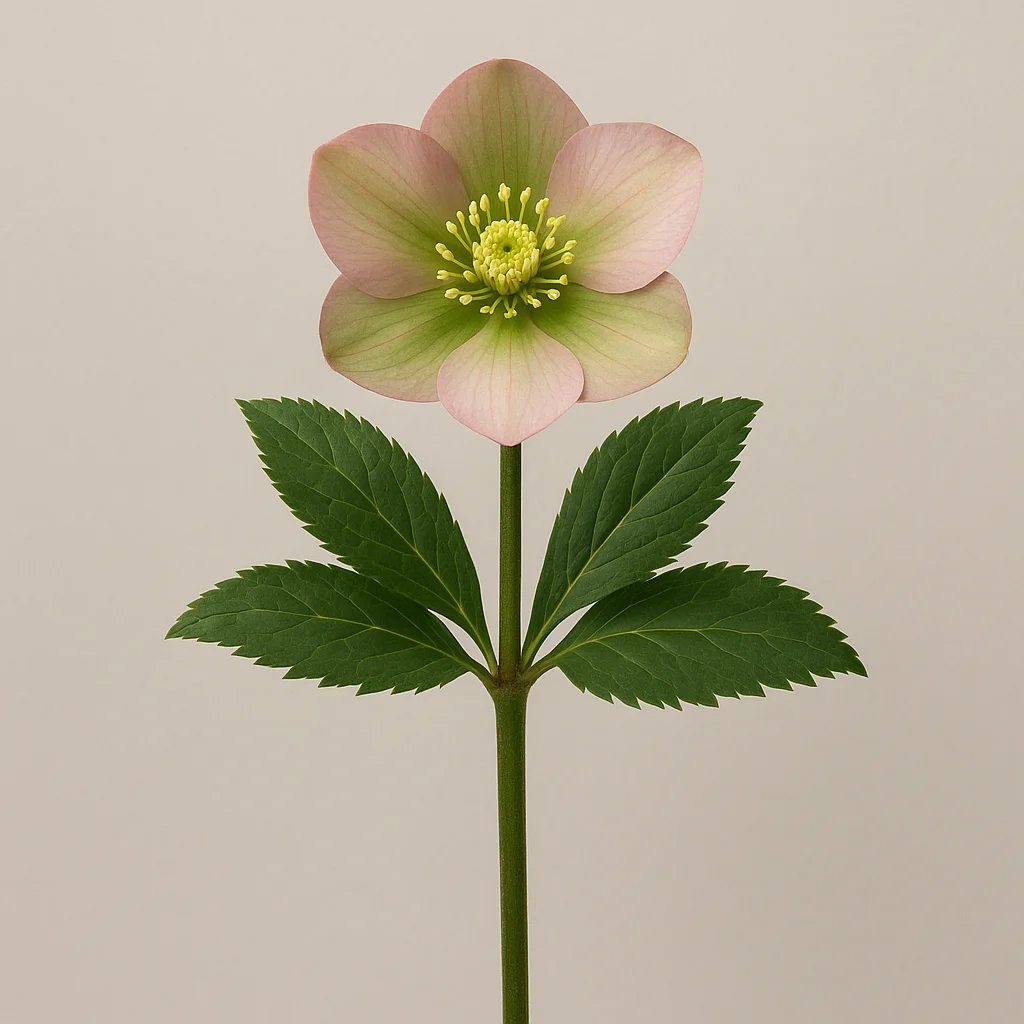
Hellebores are herbaceous or evergreen perennial plants. They typically feature thick, leathery leaves and exhibit a varied color spectrum in their blooms, ranging from pure whites and subtle greens to vibrant pinks, purples, and deep reds. The flowers are cup-shaped and can be nodding or outward-facing, often with a central arrangement of prominent stamens, adding to their allure.
- Genus: Helleborus
- Family: Ranunculaceae
- Commonly Known As: Christmas rose, Lenten rose
When envisioning images of hellebores, one should picture the complete flower plant, with the entire bloom, stem, and leaves fully visible within the frame, ensuring that the flower's intricate structure is appreciated in its entirety.
🌍 Origin & Natural Habitat
Hellebores primarily hail from regions across Europe and Asia, with their range extending from the Alps through the Balkans and into parts of Asia. These plants thrive in mountainous woodlands, where they are adapted to shaded and semi-shaded environments, often growing under the canopy of trees. The resilience of hellebores in these conditions has contributed to their popularity as hardy garden plants capable of withstanding winter’s chill.
📅 Blooming Season
The blooming season of hellebores is one of their most celebrated traits. These plants typically flower from late winter to early spring, with some varieties beginning as early as December and continuing through March. The sight of hardy, colorful blooms heralding the approach of spring makes hellebores invaluable to gardeners who wish to maintain visual interest in their plots year-round.
🌱 Growing & Care Tips
Growing hellebores can be a rewarding endeavor, provided that several key factors are considered. These plants prefer well-draining, humus-rich soil and benefit from a spot with partial to full shade, which mimics their natural woodland habitat. Adequate moisture during the growing season is essential, yet overly wet conditions should be avoided to prevent root rot.
- Soil: Rich, well-draining soil with a neutral to slightly alkaline pH.
- Light: Partial to full shade is optimal.
- Watering: Regular watering during growth, less in dormancy.
- Spacing: Space plants 18 to 24 inches apart to allow for air circulation and growth.
✂️ Pruning & Maintenance
Pruning hellebores is crucial to maintain their aesthetic appeal and health. Although they are low-maintenance, the removal of old or damaged foliage in late winter or early spring, just before new growth emerges, helps to reduce the risk of disease and improves air circulation around the plant. Additionally, regular maintenance involves checking for and removing any diseased or yellowing leaves throughout the growing season.
🌺 Symbolism & Cultural Meaning
Hellebores have a rich tapestry of symbolism and have been historically associated with protection and tranquility, likely due to their ability to bloom in the heart of winter. Known as the "Christmas rose" and "Lenten rose," these flowers are linked to rebirth and renewal, symbolic of the transition from winter to spring. They have been featured in folklore and are celebrated for their enduring beauty and strength in the face of adversity.
💐 Popular Uses & Arrangements
The picturesque blooms of the hellebore make them a favored choice in floral arrangements, often utilized in winter and early spring bouquets. Their diverse colors and shapes provide an excellent accent to foliage and other seasonal flowers. In gardens, these plants are often used in shaded borders, woodland gardens, or as groundcovers under trees, showcasing complete bloom and stem within the landscape setting, avoiding any cropped or incomplete visual representations.
⚠️ Safety, Toxicity & Precautions
Like many members of the Ranunculaceae family, hellebores contain compounds that can be toxic if ingested, with symptoms including gastrointestinal distress and skin irritation upon contact. It is advisable to plant them in areas away from children and pets and to handle them with gloves during gardening tasks. While their allure is undeniable, it is important to admire these plants with a degree of caution and respect for their potentially harmful qualities.
📌 Summary
Hellebores are a fascinating group of plants that bring beauty and color to some of the darkest months of the year. Their resilience and unassuming charm have made them a beloved choice for gardeners across the globe. By understanding their needs and characteristics, one can successfully integrate these blooms into garden spaces, appreciating the complete flower plant’s allure while taking necessary precautions regarding their care and handling.