🌸 Grape Hyacinth
The Grape Hyacinth, known scientifically as Muscari, is a beloved spring-blooming perennial cherished for its clusters of small, bell-shaped flowers that resemble bunches of grapes. These charming blooms grace gardens with their vivid purples and blues, making them a favorite among gardeners and landscape enthusiasts. Besides their beauty, Grape Hyacinths are appreciated for their resilience and ease of cultivation, making them an ideal choice for both novice and seasoned gardeners alike.
🌼 Botanical Overview
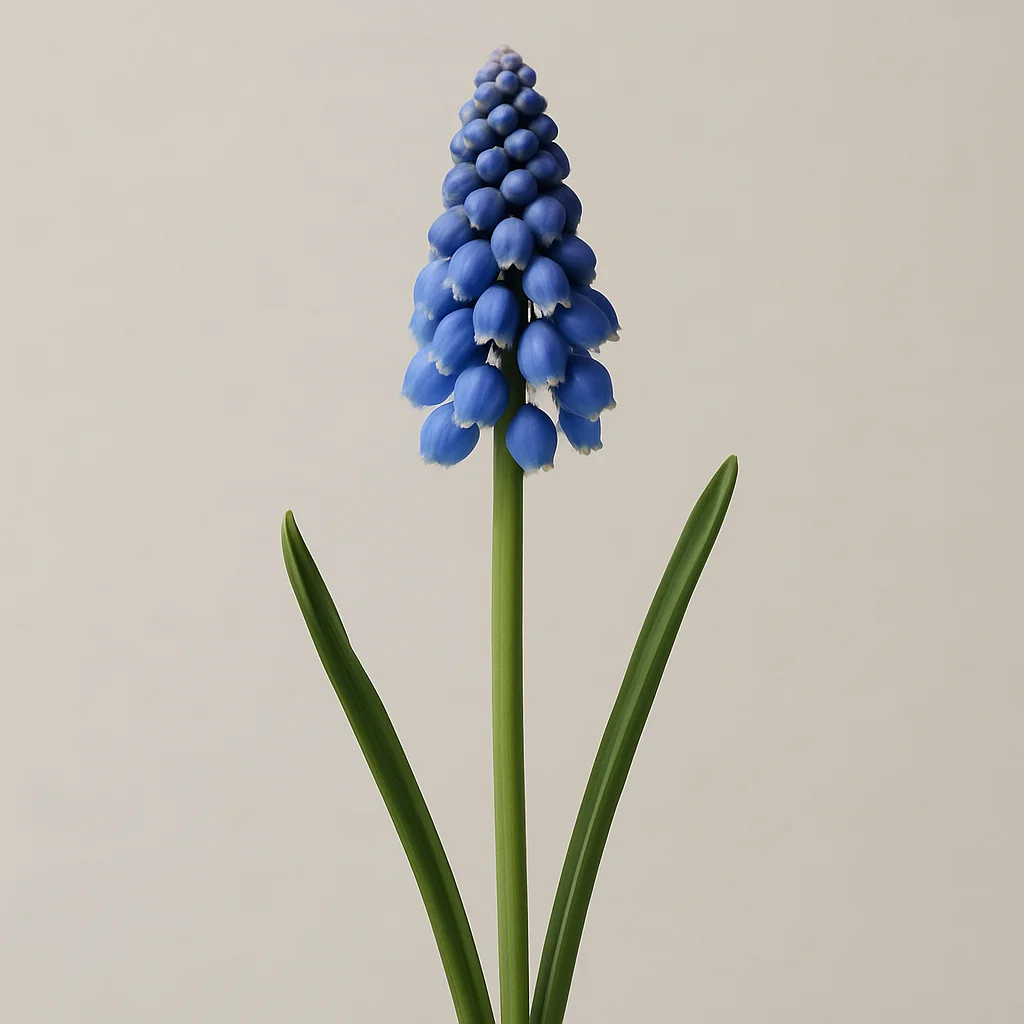
Grape Hyacinth belongs to the Asparagaceae family, a group of flowering plants more commonly recognized for their ornamental and edible varieties. With around 30 species in the Muscari genus, these plants vary in height, typically ranging from 15 to 25 centimeters. Each stem hosts a cluster of small, tightly packed flowers that exude a mild, sweet fragrance often reminiscent of honey.
The bright green leaves of the Grape Hyacinth are long and slender, providing a lovely contrast to the vibrant hues of the flowers. Each leaf is basal, arising directly from the bulb, which grounds the plant firmly in the soil. The Grape Hyacinth is not only admired for its visually striking blooms but also for the structured elegance of its growth habit, which is fully appreciated when the entire plant is visible.
🌍 Origin & Natural Habitat
Native to regions of Europe, North Africa, and Asia, Grape Hyacinths are found thriving in diverse environments, from mountainous terrains to meadows. They flourish particularly well in temperate climates, where they have naturalized and spread expansively outside their native range.
In the wild, these hardy plants often appear in large drifts across grasslands, competing bravely against other resilient species. Their ability to proliferate quickly has made them a consistent presence in many landscapes where they sometimes escape garden confines into surrounding areas.
📅 Blooming Season
Grape Hyacinths herald the onset of spring with their blooms emerging as early as March and lasting into late April or early May, depending on the climate. This timing positions them perfectly to fill the seasonal gap when winter flowers fade and before summer perennials take the stage.
The blooming of Grape Hyacinths is characterized by the plant's entire flower structure coming into frame, with each bloom forming a tight, complete cluster atop its slender, upright stem. This seasonal display not only adds beauty but also serves as a crucial source of nectar for early-season pollinators.
🌱 Growing & Care Tips
Cultivating Grape Hyacinth is relatively straightforward, even for those new to gardening. Here are some essential tips:
- Soil: Plant Grape Hyacinths in well-draining soil, enriched with organic matter to provide adequate nutrients.
- Sunlight: These flowers prefer full sun to partial shade, ensuring they receive enough light to bloom profusely.
- Watering: While they are drought-tolerant, regular watering is essential during the growing season to keep the soil moist.
- Fertilization: A light application of a balanced fertilizer in early spring helps support robust growth and flowering.
- Planting Depth: Bulbs should be planted around 8cm deep and spaced about 5-10cm apart.
Following these guidelines ensures your Grape Hyacinths bloom spectacularly, showcasing their complete bloom and stem with vigor each spring.
✂️ Pruning & Maintenance
Once flowering concludes, Grape Hyacinths enter a dormant phase. As the blooms fade and the leaves begin to yellow, it is critical to let the foliage die back naturally. This process allows the plant to transfer energy back to the bulb for the following year’s growth.
Remove any dead foliage from the ground to minimize disease risk and maintain garden tidiness. It's important to keep in mind that minimal direct intervention is needed, and the plant's full life cycle should be visible uninterrupted to observe its natural growth habits fully.
🌺 Symbolism & Cultural Meaning
Throughout history, Grape Hyacinths have been symbols of rebirth, renewal, and the arrival of spring. Their deep blue and purple hues are commonly associated with peace and tranquility. In various cultures, these colors signify hope and a fresh start, linked to the plant’s emergence after winter’s dormancy.
In gardens, the Grape Hyacinth often symbolizes optimism and is seen as a herald of changing seasons. Its placement in landscape design often serves to bridge the gap between winter dormancy and summer abundance with a complete bloom that resonates hope and renewal.
💐 Popular Uses & Arrangements
Grape Hyacinths are versatile and highly favored in various floral arrangements due to their vibrant color and unique shape. Whether used in garden borders, rock gardens, or container plantings, they add an eye-catching dimension when the entire flower is in the frame.
- Garden Borders: Utilize Grape Hyacinths along pathways or as edges to garden beds to create a sea of color that defines spaces beautifully.
- Cottage Gardens: Their natural look and colorful appearance make them perfect for informal garden styles where they can naturalize freely.
- Cut Flowers: Their delightful fragrance and charming aesthetics make them popular in vase arrangements for indoor enjoyment.
In their cut form, ensure stems and blooms are presented fully, as this enhances their visual appeal, making them a delightful addition to spring bouquets.
⚠️ Safety, Toxicity & Precautions
Grape Hyacinths are generally considered non-toxic and safe for gardens frequented by pets and children. However, it is always prudent to ensure that plant material is not ingested in large quantities to avoid digestive upset.
As a rule of thumb, observe basic safety protocols when handling garden plants. Although rare, those with sensitivities might experience mild skin irritation. Wearing gloves while performing garden maintenance helps mitigate this risk while ensuring all parts of the plant, from bloom to leaves, are safely handled.
📌 Summary
A robust symbol of springtime rejuvenation, the Grape Hyacinth is a stunning and beloved plant with broad appeal. Its full blooms provide a vibrant visual welcome to the season, and its ease of cultivation makes it accessible to many gardeners.
An environmentally beneficial planting that attracts pollinators while requiring minimal maintenance, the Grape Hyacinth’s versatility in borders and bouquets adds both color and joy. By understanding and appreciating their unique growth habits and symbols, one can fully enjoy these plants' presence in any garden landscape.