🌸 Freesia
Freesia is a genus of herbaceous perennial flowering plants native to the eastern side of southern Africa, from Kenya to South Africa. Known for their enchanting fragrance and vibrant colors, freesias are a popular choice for gardens, bouquets, and interior decoration. Their graceful blooms and pleasing scent make them a favorite among gardeners and florists alike, contributing to their enduring popularity worldwide.
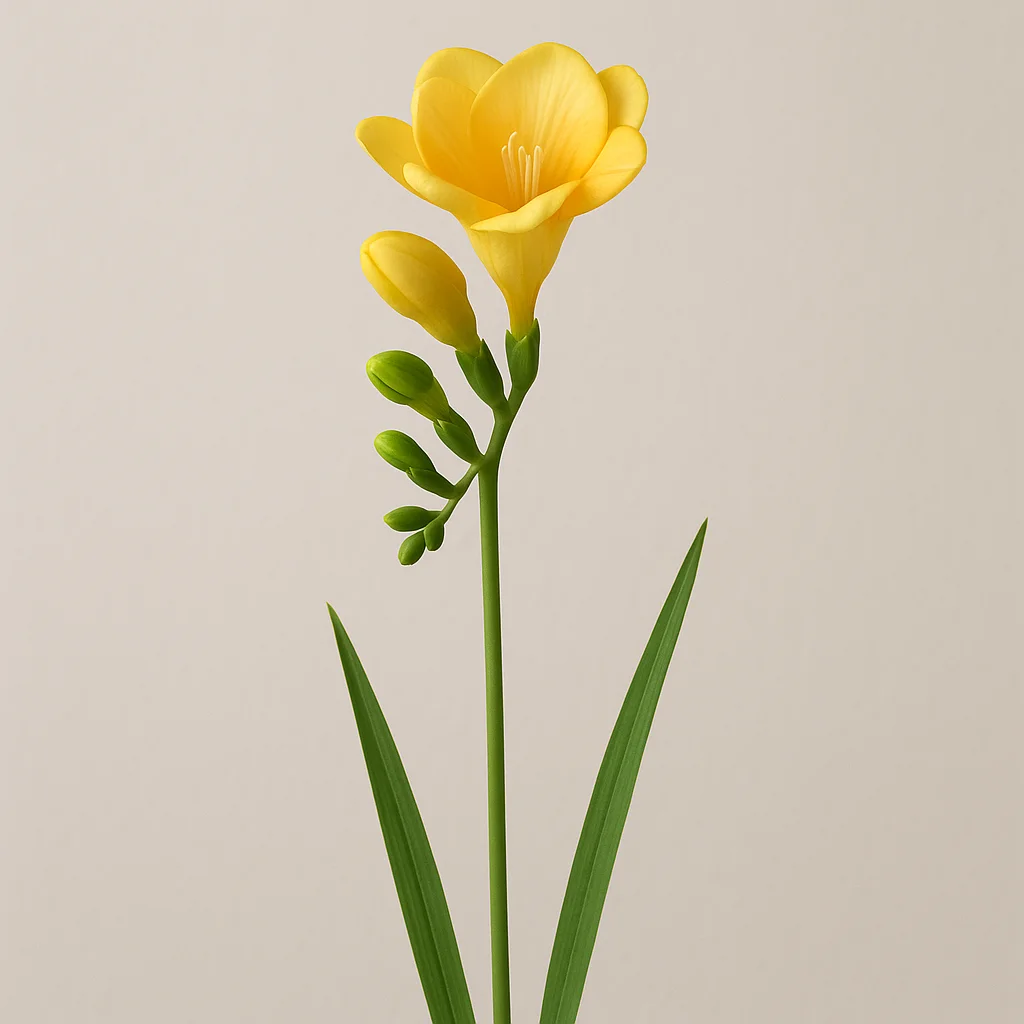
🌼 Botanical Overview
The Freesia genus belongs to the Iridaceae family and includes about 16 species. The most commonly cultivated species is Freesia refracta, known for its elegant appearance. Freesias grow from corms and form narrow, grass-like leaves. The plants generally reach heights of about 30 to 60 cm. Their flowers are funnel-shaped with six tepals and are organized in a unilateral inflorescence that hangs on one side of the stem. These flowers come in a range of colors including white, yellow, pink, red, mauve, and purple.
🌍 Origin & Natural Habitat
Originally hailing from the eastern regions of southern Africa, the natural habitat of freesias is open grasslands and meadows, where they enjoy well-drained soils and moderate climates. They are adapted to the Mediterranean climates characteristic of their native regions, enjoying warm, dry summers, and cool, wet winters. Over time, freesias have been cultivated in various parts of the world and adapted to diverse environments.
📅 Blooming Season
Freesias are known for their distinct blooming pattern. In their native habitat, they typically bloom in late winter to early spring. When cultivated in gardens, they can be encouraged to flower at different times by manipulating their growing conditions. In many temperate climates, freesias are planted in fall to ensure they bloom in springtime. In warmer regions, they can be planted in winter for a late spring bloom.
🌱 Growing & Care Tips
Cultivating freesias requires attention to specific growing needs to ensure healthy and vibrant blooms. Here’s a guide to successfully grow and care for freesias:
- Soil: Well-drained soil is essential for freesias. Amending soil with organic matter such as compost can improve drainage and nutrient content.
- Sunlight: Freesias thrive in full sun to partial shade. Ensure they receive at least 6 hours of sunlight per day.
- Watering: Keep the soil consistently moist during the growing season but ensure good drainage to prevent waterlogging.
- Temperature: Plant freesias in areas where the temperature ranges between 10°C to 20°C for optimal growth.
- Fertilization: A balanced liquid fertilizer applied every 2 to 3 weeks during the growth period enhances blooms and foliage health.
✂️ Pruning & Maintenance
Proper pruning and maintenance are vital to keep freesias looking their best and promoting continuous blooms:
- Deadhead spent flowers regularly to promote new growth and a longer blooming period.
- Once flowering is over and foliage begins to die back naturally, cut back the brown leaves to prepare the plant for the next growth cycle.
- Lift corms in autumn if growing in areas with severe winters and store them in a cool, dry place.
- Check regularly for signs of pests and diseases and treat promptly with appropriate methods.
🌺 Symbolism & Cultural Meaning
Freesias are rich in symbolism and cultural significance. They are often associated with trust, innocence, and friendship, making them a popular choice for bouquets and gifts during weddings and other celebrations. The flower’s pleasing aroma and delicate appearance also contribute to its symbolic association with purity and thoughtfulness.
💐 Popular Uses & Arrangements
Due to their vibrant colors and delightful fragrance, freesias have become a staple in floral arrangements and decorative uses:
- Bouquets: Freesias make excellent cut flowers for bouquets due to their long vase life and colorful blooms.
- Weddings: Their symbolism makes them a favorite choice for bridal bouquets and boutonnieres.
- Home Décor: Freesias are often used in vases and arrangements to bring color and fragrance indoors.
- Perfumery: The essential oils extracted from freesias are valued for their sweet, citrusy fragrance and are utilized in creating perfumes.
⚠️ Safety, Toxicity & Precautions
Freesias are considered non-toxic to humans and pets, making them safe choices for households with children and animals. However, as with any plant, it’s always wise to monitor young children and pets around freesias to avoid accidental ingestion of plant material. While generally safe, individual allergic reactions may still occur, so handling with care and washing hands after gardening is advisable.
📌 Summary
Freesias are a charming addition to any garden or floral arrangement, admired for their vibrant hues and irresistible fragrance. They hold a treasured place in symbolic and cultural traditions, providing not only beauty but also meaning to those who cultivate and cherish them. As long as their growing needs are met—such as sunlight, well-drained soil, and regular care—freesias promise to reward gardeners with their stunning blooms. Whether planted in home gardens, used in bespoke bridal bouquets, or simply appreciated in their natural habitat, freesias continue to captivate with their graceful elegance and enduring appeal.