🌸 Forsythia
Forsythia is a beloved genus of flowering plants in the olive family, known for their vivid yellow blossoms that mark the early arrival of spring. Often heralded as one of the first signs of the season, Forsythia's bright, cheerful flowers offer a welcome burst of color after the dull, gray months of winter. Its rapid growth and ease of care make it a popular choice for both novice and experienced gardeners alike. Whether used as a hedge, in mixed borders, or as a stand-alone ornamental plant, Forsythia's versatility and striking appearance have cemented its position in gardens around the world.
🌼 Botanical Overview
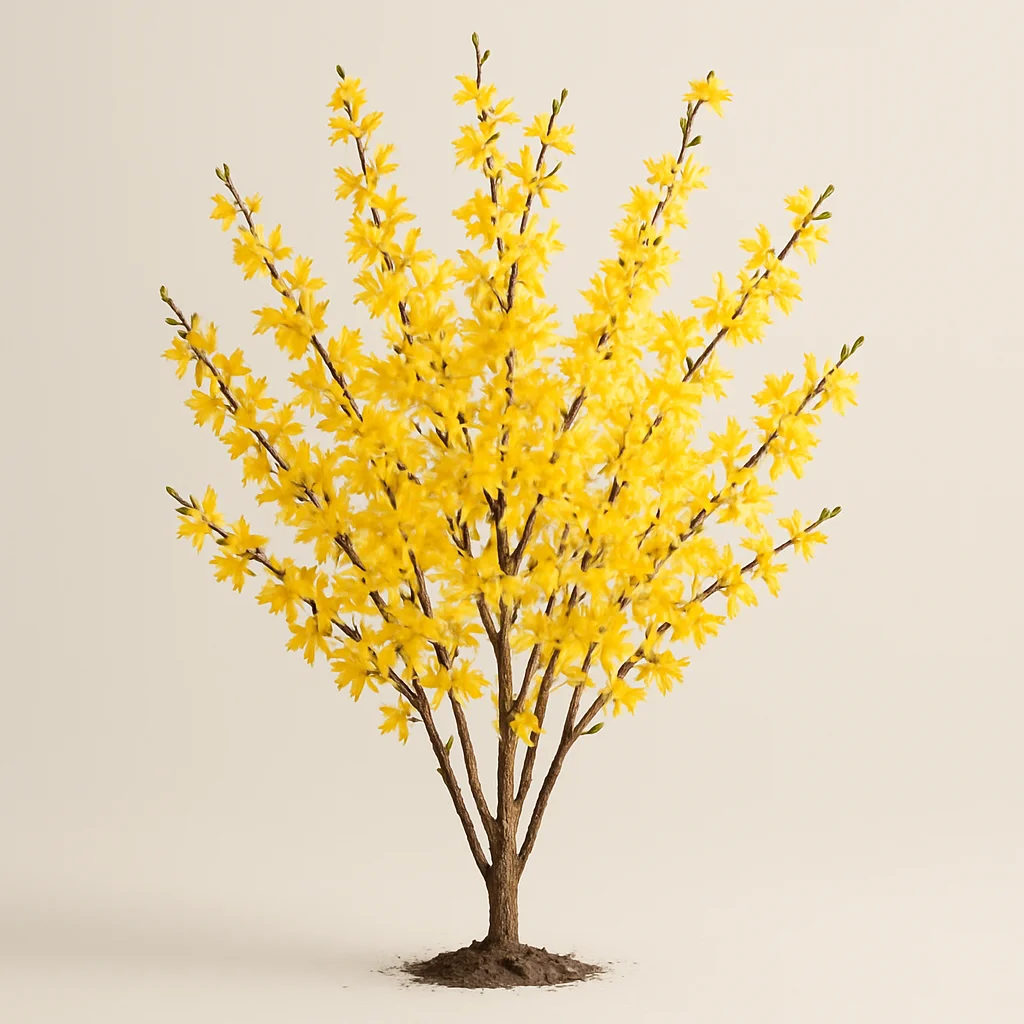
Forsythia consists of about 11 species, although the most commonly cultivated types are Forsythia × intermedia, Forsythia suspensa, and Forsythia viridissima. This genus falls within the family Oleaceae, the same family as olives. The plants are mainly deciduous shrubs, with their height ranging from 1 to 3 meters, although some species can grow even taller under optimal conditions.
The leaves of Forsythia are usually simple, occasionally trifoliate, and exhibit serrated edges. Their vibrant yellow flowers are typically four-lobed and tubular, blooming on bare branches in early spring. The blooming is so profuse that it almost obscures the plant's branches entirely, creating a stunning display. When the flowers wane, they give way to fresh, green leaves that fill the shrub through the summer months. Image descriptions of Forsythia typically show the "full plant visible", capturing the entire display from roots to the tips of the blooming branches.
🌍 Origin & Natural Habitat
Forsythia originally hails from Eastern Asia, with some species native to Southeast Europe. In particular, many species are indigenous to areas in China and Korea. Forsythia suspensa notably originates from China, while Forsythia viridissima comes from the Korean Peninsula. These regions provide the environmental conditions in which Forsythia thrives, characterized by cold winters and warm, humid summers.
Over time, Forsythia was introduced to Europe and North America, where it quickly gained popularity due to its hardiness, attractive blooms, and relative ease of cultivation. Today, it is widely grown in temperate climates around the globe, adorned in gardens, parks, and urban landscapes.
📅 Blooming Season
Forsythia is renowned for ushering in the spring season with its early bloom of bright yellow flowers. In many climates, Forsythia flowers appear as early as late winter to early spring, often before the leaves fully develop. This makes Forsythia one of the earliest spring bloomers, sometimes blooming as soon as temperatures begin to rise and the danger of significant cold snaps has passed.
The flowering season for Forsythia generally lasts several weeks, with the peak bloom time varying slightly based on geographical location and climate conditions. While some flowers may persist into early summer, the majority of the blossoms are at their prime in early spring, symbolizing the transition from winter's dormancy to the vibrancy of spring.
🌱 Growing & Care Tips
Growing Forsythia can be a rewarding experience, as these resilient shrubs require minimal maintenance once established. Here are some important tips for optimal growth:
- Soil: Forsythia prefers well-drained soil but is tolerant of a wide range of soil types, including clay, loam, and sandy soils.
- Sunlight: Plant Forsythia in full sun to ensure the most abundant flowering. While it can tolerate partial shade, the number of flowers may be reduced.
- Watering: Young plants need regular watering to establish deep roots, but mature plants are fairly drought-tolerant.
- Fertilization: Applying a balanced fertilizer in early spring can support healthy growth and enhance flowering.
- Spacing: Provide adequate spacing when planting Forsythia to accommodate their mature size and promote good air circulation, helping to prevent fungal diseases.
Image representations of Forsythia show the "entire flower in frame", highlighting the full glory of the blooms along with the supporting branches.
✂️ Pruning & Maintenance
Pruning Forsythia is essential to maintain its shape and encourage vigorous flowering in the next season. The best time to prune Forsythia is immediately after the flowering period ends.
- Remove dead or damaged wood: Cutting away dead or weak branches helps improve the overall health and appearance of the shrub.
- Shape the plant: Lightly trimming the plant can help maintain its desired size and shape, preventing it from becoming overgrown.
- Encourage new growth: Forsythia benefits from removing the oldest branches near the base to promote new shoots, which will result in a more vibrant display the following spring.
Pruning should aim to preserve the aesthetic value of the plant while ensuring its vitality and capacity to produce flowers. "Complete bloom and stem" image descriptions are ideal, showing how a well-pruned plant maintains its visual appeal and structural integrity.
🌺 Symbolism & Cultural Meaning
Forsythia holds significant cultural symbolism, especially in Eastern traditions where it is seen as a harbinger of spring. Its early blooms are often associated with renewal, hope, and new beginnings. People in China and Korea have traditionally regarded the Forsythia flower as a symbol of anticipation and change.
Beyond its symbolic meanings, Forsythia has also been used in traditional medicine, particularly in China, where extracts from the plant are part of herbal remedies. While botanical studies continue to explore these applications, Forsythia's primary contribution remains its aesthetic and cultural presence.
💐 Popular Uses & Arrangements
Forsythia is frequently used in garden compositions and landscaping due to its bright coloration and early flowering. Here are some popular applications:
- Hedges and borders: Forsythia is often planted as a dense hedge or border, offering a stunning boundary lined with golden blooms.
- Ornamental features: Its striking flowers make Forsythia an ideal choice as a standalone ornamental feature within a garden.
- Cut flowers: Forsythia branches are used as cut flowers in indoor arrangements, adding a touch of springtime with their vivid yellow flowers.
- Natural screens: With its rapid growth, Forsythia can serve as a natural privacy screen, providing coverage and beauty simultaneously.
Images of Forsythia in floral arrangements or garden settings should show the "full plant visible", allowing appreciation of the natural form and beauty of the entire structure.
⚠️ Safety, Toxicity & Precautions
Forsythia is considered non-toxic to both humans and pets, making it a safe choice for homes with children and animals. However, as with any plant, it's advisable to prevent pets from excessive chewing on the leaves or blooms to avoid any potential digestive discomfort.
As a general precaution, individuals with plant-related allergies should handle Forsythia with care, as the pollen may trigger symptoms in sensitive individuals. Always wash hands after pruning or interacting with the plant to prevent potential skin irritation.
📌 Summary
Forsythia is undoubtedly one of the most vibrant heralds of spring, offering a visually delightful transition from winter. With its low maintenance needs and eye-catching golden blooms, it has earned its rightful place in gardens and landscapes worldwide. Beyond its ornamental value, Forsythia embodies cultural significance centered on renewal and hope, making it a cherished plant across various traditions.
In cultivating Forsythia, gardeners can look forward to its sprawling branches laden with blossoms, gracing them with beauty and color year after year. Its ability to adapt to diverse environments and its early bloom time enhance its appeal as a garden staple and ornamental feature.