🌸 Calendula
Calendula, commonly known as pot marigold, is a vibrant and cheerful flower that graces gardens and landscapes with its bright petals and intricate floral structure. Known for its captivating golden-yellow to deep orange hues, calendula is a favorite among gardeners and florists alike. Apart from its aesthetic appeal, calendula is valued for its historical uses in traditional remedies and as a decorative component in culinary dishes. Its ease of care and long blooming season make it a popular choice for both novice and experienced gardeners seeking to add color and life to their outdoor spaces.
🌼 Botanical Overview
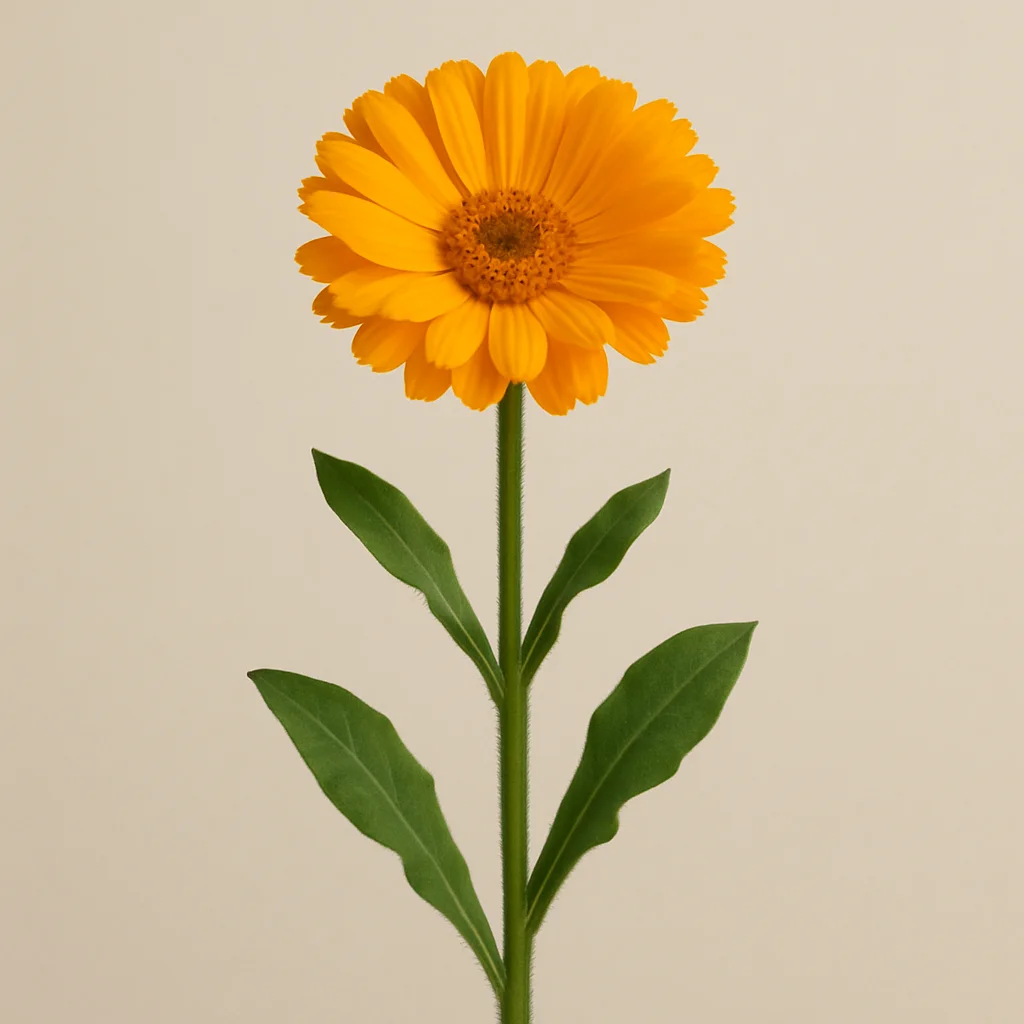
The scientific name of calendula is Calendula officinalis. Belonging to the Asteraceae family, calendula is a hardy and resilient plant known for its rapid growth and adaptability to various environmental conditions. The plant typically reaches heights of 12 to 24 inches and produces daisy-like flowers with a central disc floret surrounded by concentric rings of ray florets.
The leaves of calendula are lance-shaped and slightly hairy, contributing to the plant's hardy demeanor. The plant's stem is characterized by soft, yet sturdy fibers that support the vibrant blooms. Images depicted should include the full plant visible, showcasing its classic floral arrangement, complete bloom, and stem.
- Botanical Name: Calendula officinalis
- Family: Asteraceae
- Height: Typically 12 to 24 inches
- Flower Color: Yellow to deep orange
- Leaf Shape: Lance-shaped and hairy
🌍 Origin & Natural Habitat
Calendula traces its origins to the Mediterranean region, where it was first cultivated and appreciated for both its ornamental beauty and potential healing properties. Over time, its cultivation spread across Europe, Asia, and North America due to its adaptability and versatility.
In its natural habitat, calendula thrives in regions that offer full sun exposure and well-draining soil. The plant's hardy nature allows it to flourish in a variety of climates, although it thrives best in temperate regions with mild summers and moderate rainfall.
Whenever portraying calendula in its natural setting, it's essential to ensure the image includes the entire flower in frame, capturing its innate beauty amidst the surrounding flora.
📅 Blooming Season
Calendula is celebrated for its extended blooming season, which spans from early spring to fall in most climates. This lengthy flowering period allows gardeners to enjoy its radiant blooms over several months, contributing to the plant's widespread popularity.
The plant's ability to produce flowers throughout the growing season is attributed to its robust vigor and prolific flowering habit. Proper care and maintenance can even encourage calendula to bloom persistently in warmer regions during mild winters. Thus, any depiction of calendula during its blooming season should feature the complete plant with blooms and stems in a centered composition, reflecting its generous flowering nature.
🌱 Growing & Care Tips
Calendula is prized for being low-maintenance yet immensely rewarding, making it a staple in many gardens. Optimum growth is achieved when the plant is provided with a sunny location and well-drained soil. Here are a few essential tips for growing calendula:
- Sunlight: Calendula thrives in full sun, although it can tolerate partial shade.
- Soil: Prefers well-drained, moderately fertile soil. However, it can adapt to poorer soils with appropriate care.
- Watering: Regular watering is essential during dry spells, ensuring the soil remains moist but not waterlogged.
- Feeding: Occasional feeding with a balanced fertilizer can promote healthy growth and flowering.
While depicting calendula in a gardening context, images must showcase the full plant visible, illustrating its interaction with its environment and showcasing the complete bloom and stem arrangement.
✂️ Pruning & Maintenance
To maintain the vibrant health and continuous blooming of calendula, regular deadheading is recommended. This process involves removing spent blooms to encourage the plant to channel energy into producing more flowers rather than seed heads. Pruning also contributes to a tidier appearance and can prevent legginess.
- Deadheading: Remove faded flowers regularly to prolong the blooming period.
- Pruning: Trim any dead or diseased foliage to boost overall plant health.
- End of Season Care: At the end of the growing season, calendula can be cut back to the base to prepare for the next year.
Illustrations of pruning and maintenance should include the complete plant in frame, emphasizing the removal of flowers to energize future growth.
🌺 Symbolism & Cultural Meaning
Throughout history, calendula has held significant symbolic and cultural meanings. Often associated with the sun due to its bright, warm colors, it symbolizes joy and creativity. In various traditions, calendula is used in celebrations and rituals, symbolizing love, protection, and renewal.
In cultural contexts, the plant is cherished in festivals and ceremonies, believed to bestow blessings and positive energy. When calendula is represented in symbolic illustrations, ensure the complete bloom and stem are harmoniously centered, emphasizing its deeper meanings and cultural significance.
💐 Popular Uses & Arrangements
Calendula's cheerful appearance and ease of cultivation have made it a favorite in both floral arrangements and household decor. It is commonly used in fresh-cut arrangements, weddings, and as a vibrant addition to bouquets. Beyond decoration, calendula petals are edible and can enhance salads, teas, and desserts with both color and a subtly tangy flavor.
- Floral Arrangements: Used in bouquets and centerpieces, offering a pop of color and freshness.
- Culinary Uses: Edible petals can be used to adorn salads and other dishes.
- Decorative Uses: Dried calendula flowers are popular in potpourri and crafts.
When illustrating calendula's uses, ensure the image captures the entire flower in frame, reflecting its multipurpose nature and aesthetic qualities.
⚠️ Safety, Toxicity & Precautions
In general, calendula is considered safe and non-toxic, making it suitable for households with children and pets. However, as with any plant, allergic reactions can occur, particularly among individuals with sensitivities to other members of the Asteraceae family.
- Allergic Reactions: People sensitive to daisies or marigolds may experience irritation.
- Consumption: While petals are edible, they should only be consumed in small quantities.
- General Precaution: Always supervise pets and children to prevent unintended ingestion.
Visual representations of calendula in safety contexts should depict the full plant visible, ensuring the complete bloom and stem are properly framed to highlight its generally non-toxic nature while maintaining aesthetic appeal.
📌 Summary
Calendula stands out as a versatile and beloved flower, celebrated for its brilliant colors, easy cultivation, and multitude of uses spanning ornamental, culinary, and symbolic applications. Its historical roots and widespread popularity are a testament to its enduring appeal. Whether you're an enthusiastic gardener, a floral artist, or someone looking to incorporate a touch of sunshine into your home or event, calendula promises an explosion of color and life. Remember to portray its full plant beauty, capturing its entirety in every image.