🌸 Bluebell
The Bluebell is a cherished wildflower known for its vibrant blue hues and bell-shaped blossoms. Often associated with enchanting woods and meadows, the Bluebell captures the imagination of botanists and flower lovers alike. Its popularity stems not only from its visual appeal but also from its roles in folklore, gardens, and ecological systems. Recognized for its ability to create mesmerizing carpets of blue in spring woodlands, the Bluebell is a focal point of seasonal beauty and ecological interest.
🌼 Botanical Overview
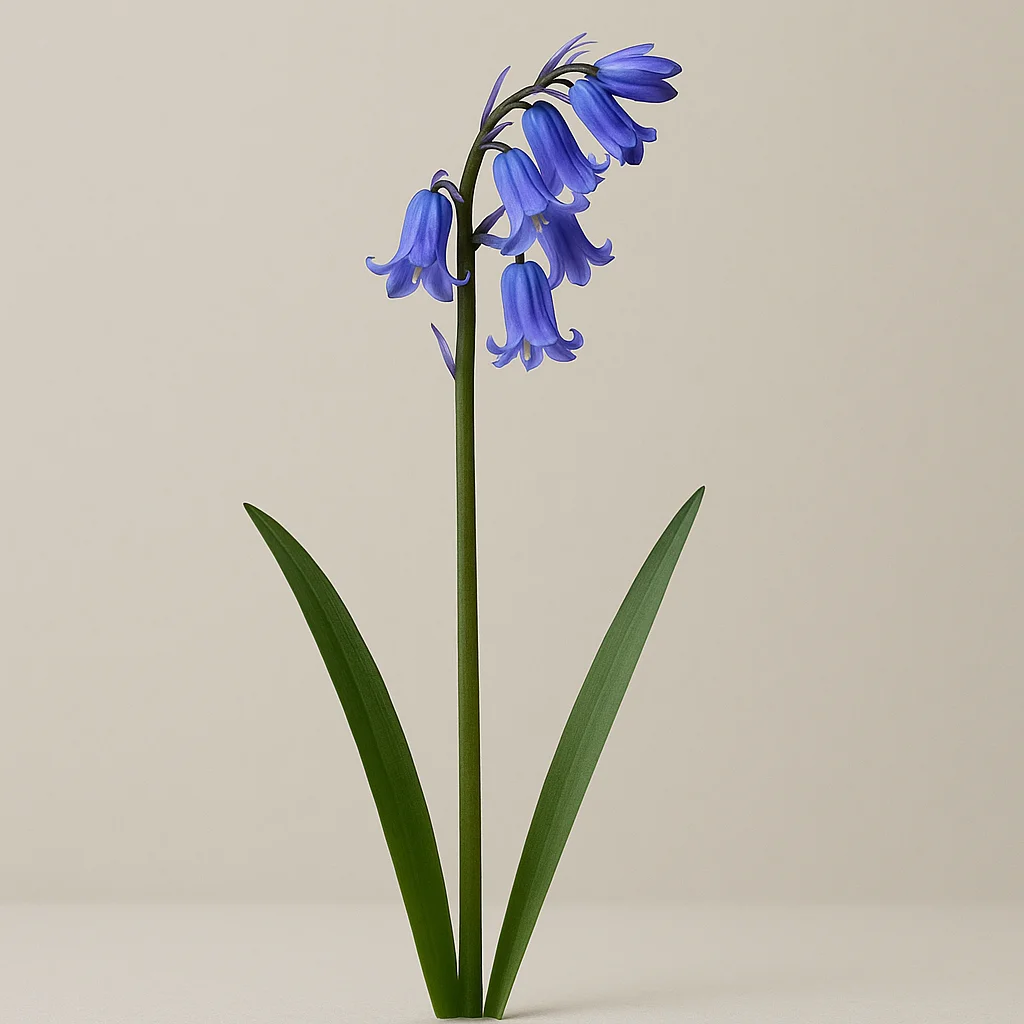
The Bluebell, scientifically known as Hyacinthoides non-scripta, belongs to the Asparagaceae family. It is distinguished by its nodding, tubular blooms that appear in dense clusters, typically on one side of the flowering stem. Each blossom is a rich blue with a delicate scent that contributes to its allure. The leaves of the Bluebell are slender and grass-like, completing the plant’s distinctive appearance.
- Plant Type: Perennial
- Height: Usually grows up to 30 cm (12 inches)
- Flower Shape: Bell-shaped
- Leaf Shape: Long, narrow, and strap-like
Full plant visible, with complete bloom and stem, captures the elegance of Bluebell in its natural setting.
🌍 Origin & Natural Habitat
The Bluebell is native to Western Europe, with its primary habitat spread across the British Isles. It thrives in deciduous woodland areas, preferring the dappled shade provided by the forest canopy. The Bluebell’s natural environment is often rich in biodiversity, supporting various forms of wildlife that rely on its flowers for nectar. Exploratory hikes through native woodlands often reveal extensive colonies of Bluebells, creating a natural spectacle often described as a "blue mist" floating across the forest floor. These natural displays contribute significantly to local tourism and ecological studies, highlighting the importance of conservation efforts for these regions.
📅 Blooming Season
The Bluebell heralds the arrival of spring, typically blooming from late April to early June, depending on the local climate. This period coincides with the broader spring awakening of woodland flowers, allowing Bluebells to play an integral role in the seasonal landscape. During its blooming season, Bluebells can dominate forest undergrowth, offering crucial resources to pollinators such as bees and butterflies. The blooming phase of Bluebells is equally short and wondrous, punctuating the end of winter with a vivid display that invites exploration and admiration.
🌱 Growing & Care Tips
Cultivating Bluebells requires an understanding of their natural preferences. These flowers thrive in environments that mimic their woodland origins. Gardeners seeking to introduce Bluebells to their landscapes can benefit from the following care tips:
- Planting Location: Choose a shaded or partially shaded location that receives indirect sunlight.
- Soil Preferences: Preferably, plant Bluebells in well-drained soil with rich organic matter.
- Watering: Bluebells require consistent moisture, especially during their growing season, but avoid waterlogged conditions.
- Spacing: Allow adequate space between plants to mimic their natural woodland spread, preventing overcrowding.
- Naturalizing: Allow the bulbs to naturalize by self-seeding over time, creating a fuller display in subsequent years.
An image should show the entire flower in the frame, presenting a comprehensive view of plant growth.
✂️ Pruning & Maintenance
While the Bluebell is a low-maintenance plant, certain practices can enhance its vitality and appearance:
- Deadheading: Remove withered blooms to encourage the plant's energy to focus on bulb development rather than seed production.
- Leaf Management: Allow leaves to die back naturally after blooming as this enables nutrient recycling into the bulbs.
- Weed Control: Regularly clear surrounding weeds which compete for nutrients and light, impacting Bluebell health.
- Overcrowding: Thin out the plants if they become too densely packed, which can lead to reduced flowering.
Show the full plant visible with complete bloom, illustrating the plant's natural cycle from growth to dormancy.
🌺 Symbolism & Cultural Meaning
Bluebells are steeped in symbolism and cultural significance. Often associated with humility, gratitude, and everlasting love, Bluebells carry a multifaceted charm within art and literature. In folklore, they are sometimes referred to as "fairy flowers," believed to call fairies to their gatherings when rung. This ethereal association enhances their allure, making them a popular subject in poetry and paintings throughout history.
As symbols of resilience due to their ability to thrive in shaded, less favorable environments, they evoke themes of growth and renewal, paralleling human experiences of perseverance and hope. A centered image showing the entire flower in frame can evoke this symbolic richness.
💐 Popular Uses & Arrangements
Though primarily a wildflower, Bluebells hold a place in horticultural design due to their beauty and symbolism. Ideal for naturalizing shady garden areas, they can transform lawns and woodland gardens into enchanting vistas:
- Natural Gardens: Perfect for woodland areas, recreating their native habitat.
- Cut Flowers: When used in floral arrangements, Bluebells add a touch of wild, romantic elegance.
- Landscape Design: Often featured in shaded borders or rock gardens for their vibrant color.
Integrating Bluebells in arrangements emphasizes their natural grace and elegance, with arrangements showcasing the complete bloom and stem.
⚠️ Safety, Toxicity & Precautions
While enchanting, Bluebells should be handled with awareness due to their toxicity. All parts of the plant contain glycosides which can be harmful if ingested by humans or animals:
- Toxicity: Toxic if leaves or bulbs are consumed.
- Pet Safety: Keep pets away to prevent chewing or ingestion of plants.
- Handling: Wear gloves when handling large quantities to avoid skin reactions.
Show the entire plant in frame to emphasize caution where the flower’s form is beautiful yet deceptive in potential risk.
📌 Summary
The Bluebell is a wildflower that stands as a testament to nature’s beauty and resilience. From its botanical features to its cultural meanings, there is much to admire and learn from this remarkable plant. Bluebells continue to hold a beloved place in gardens and hearts, resonating deeply due to their enchanting beauty and historical significance. Whether encountered in a serene woodland or a cultivated garden setting, the Bluebell invites discovery and delight.