🌸 Bleeding Heart
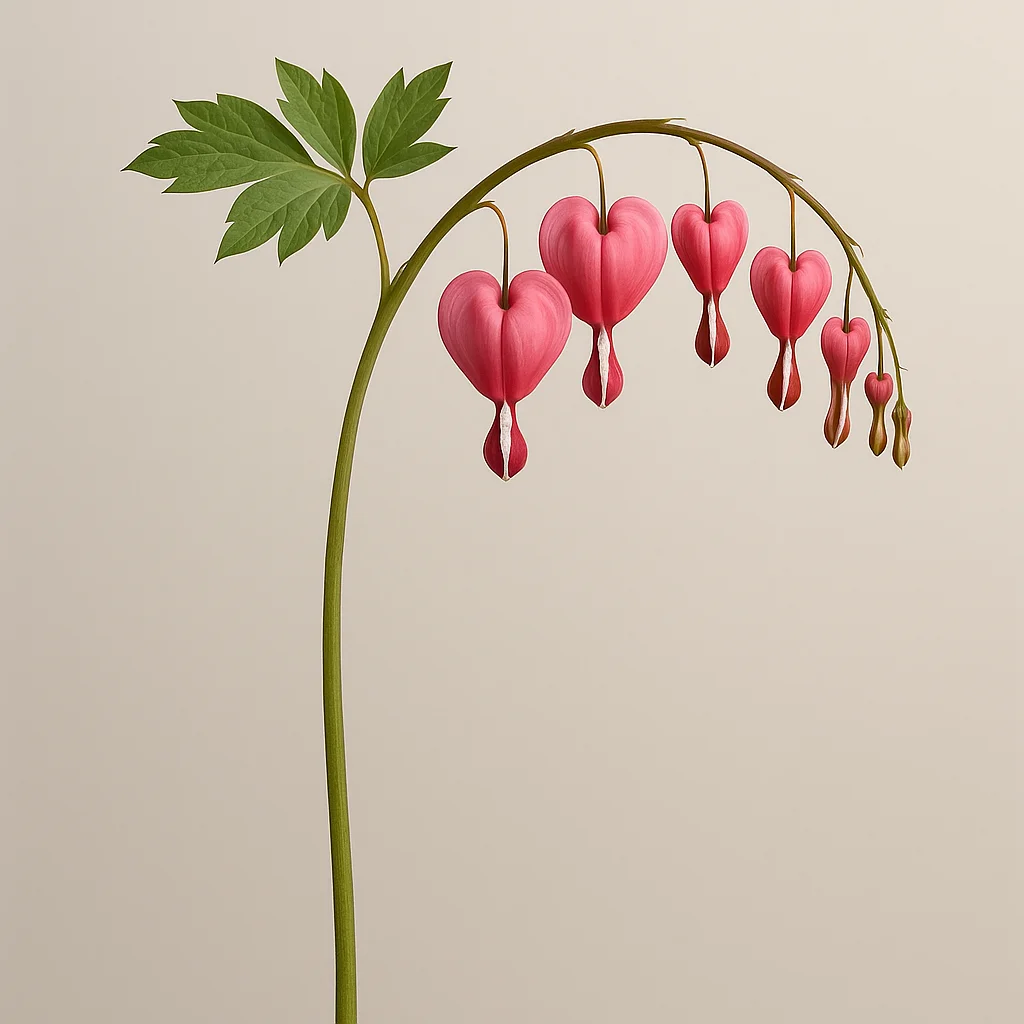
The Bleeding Heart, known scientifically as Lamprocapnos spectabilis, is a captivating and enchanting plant renowned for its heart-shaped flowers that drip with elegance. This perennial favorite is cherished for its unique appearance, adding beauty and romantic whimsy to gardens worldwide. The Bleeding Heart's intriguing shape and vibrant colors make it a standout, drawing admiration from botanical enthusiasts and casual gardeners alike.
🌼 Botanical Overview
The Bleeding Heart belongs to the poppy family, Papaveraceae, and is a herbaceous perennial. Its most distinctive feature is its pendant, heart-shaped flowers, typically pink with a white tip, which bloom along arching stems. Each blossom is a marvel of nature's artistry, appearing almost as if a tiny drop of dew is poised beneath the heart's point. The plant typically grows to a height of about two to three feet, with delicate, fern-like foliage that complements its flowers beautifully.
🌍 Origin & Natural Habitat
Native to the woodlands of Siberia, northern China, Korea, and Japan, the Bleeding Heart thrives in temperate regions. It prefers a shaded environment that mimics its natural habitat, where dappled sunlight filters through the canopy above. This makes it an ideal plant for shaded gardens, where it can grow under the cover of larger shrubs or trees. Its preference for cool, moist environments makes it well-suited to woodland gardens or any area where it can avoid the harshness of direct sun and excessive heat.
📅 Blooming Season
The Bleeding Heart is typically among the first flowers to blossom in the spring, often bursting into bloom shortly after the frost leaves the ground. Its flowering season usually begins in late spring and can persist into early summer, depending on climatic conditions. During this time, the plant is a true showstopper, offering a stunning display of pendulous blooms that can last for several weeks. After blooming, the plant may die back to the ground as it enters dormancy, conserving energy for the following year's display.
🌱 Growing & Care Tips
Growing Bleeding Heart requires understanding its need for a specific set of conditions. Ideally, plant it in an area with partial shade and well-draining soil rich in organic matter. It's essential to keep the soil consistently moist but not waterlogged to prevent root rot. A layer of mulch can help retain soil moisture and regulate temperature. Regular watering during dry spells ensures that the plant remains healthy and visually appealing.
- Plant in moist, humus-rich soil with good drainage.
- Ensure partial to full shade in hotter climates.
- Water consistently to maintain damp soil without oversaturating.
- Apply a layer of mulch to conserve moisture and suppress weeds.
- Avoid overhead watering to reduce the risk of fungal diseases.
✂️ Pruning & Maintenance
While the Bleeding Heart requires minimal pruning, some maintenance can enhance its appearance and health. After the blooming period, you may prune back spent flower stalks to encourage the plant to focus energy on foliage development. As the season progresses and if the plant begins to yellow dramatically, it is natural and signals the plant entering dormancy.
- Remove dead or damaged foliage to prevent disease.
- Prune back flower stalks post-blooming to tidy the plant.
- Allow foliage to die back naturally after the blooming season for best growth in the following year.
🌺 Symbolism & Cultural Meaning
The Bleeding Heart carries a rich symbolism, often associated with feelings of love, passion, and emotion due to its heart-like shape and vivid colors. In many cultures, it represents deep and abiding love, making it a popular choice for romantic gardens and floral arrangements. The flower's unique structure has also inspired legends and myths, weaving it into the tapestry of storytelling and cultural traditions across different societies.
💐 Popular Uses & Arrangements
With its romantic appeal, the Bleeding Heart is frequently utilized in garden designs and floral arrangements. Its cascading blooms create an elegant visual in hanging baskets or shaded garden paths. While less common in cut flower arrangements due to its shorter vase life, its striking appearance makes it a coveted addition to wedding bouquets and floral compositions aimed at conveying love and affection.
- Ideal for woodland and shade gardens.
- Popular in romantic-themed garden designs.
- Used occasionally in wedding bouquets and special floral arrangements.
⚠️ Safety, Toxicity & Precautions
While their beauty is undeniable, Bleeding Hearts should be handled with care. The plant contains isoquinoline alkaloids, which can be toxic if ingested. Therefore, it's advisable to keep children and pets away from the plant. When handling, gardeners may wish to wear gloves as a precaution against skin irritation, although reactions are rare.
- Keep away from pets and small children due to toxicity risk.
- Use gloves when handling if you have sensitive skin.
- Ensure garden tools are cleaned after pruning or cutting.
📌 Summary
The Bleeding Heart is a beautiful and evocative addition to any garden, providing an aura of romance and nostalgia with its unique, heart-shaped blooms. While relatively easy to care for, it requires specific conditions to thrive, including partial shade and consistently moist, well-draining soil. Symbolizing love and emotion, it finds its place in both traditional and modern garden designs. Despite its delicate appearance, the Bleeding Heart is a robust plant that, with proper care, will reward gardeners with enchanting flowers year after year.